Cultural Triangle
Snapshot
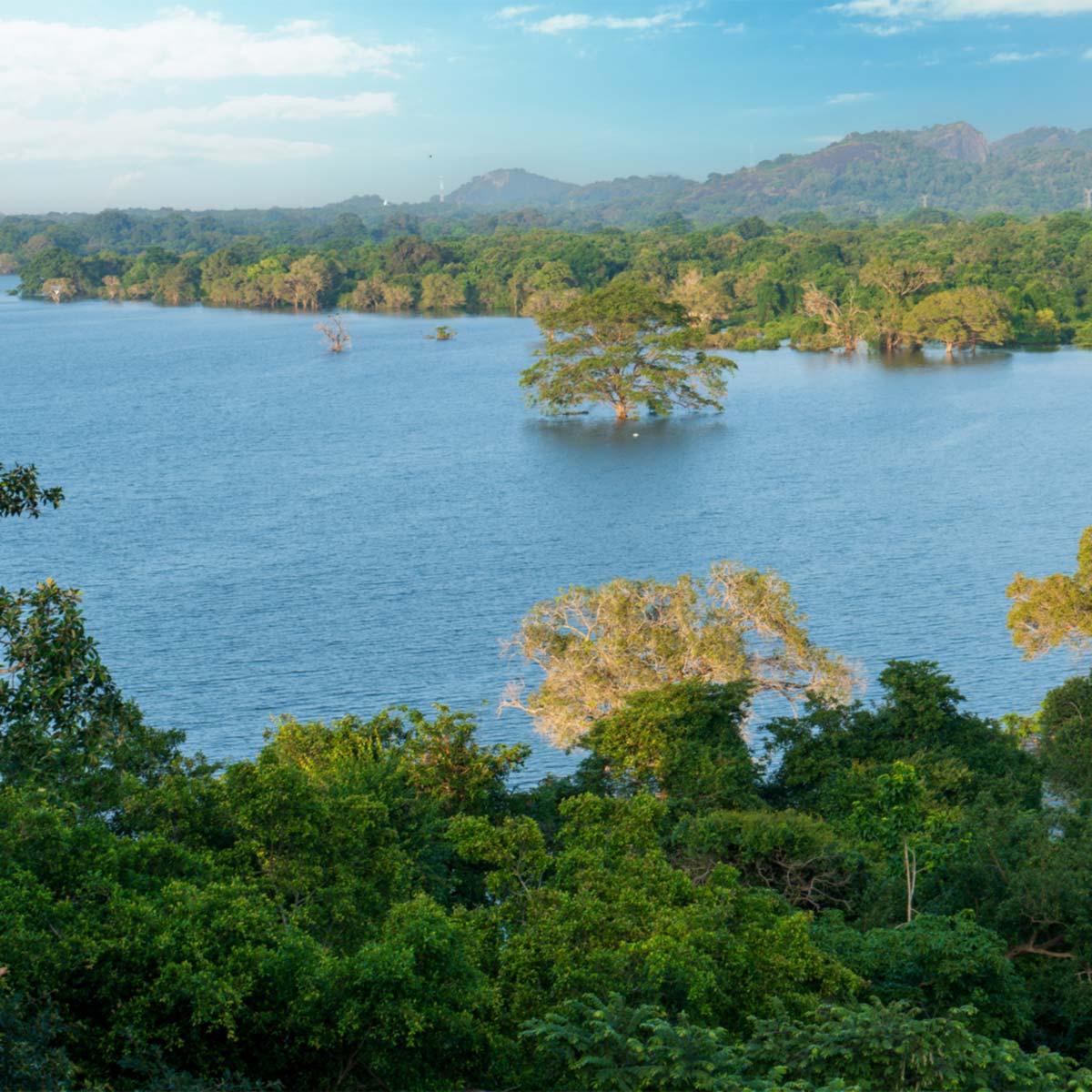
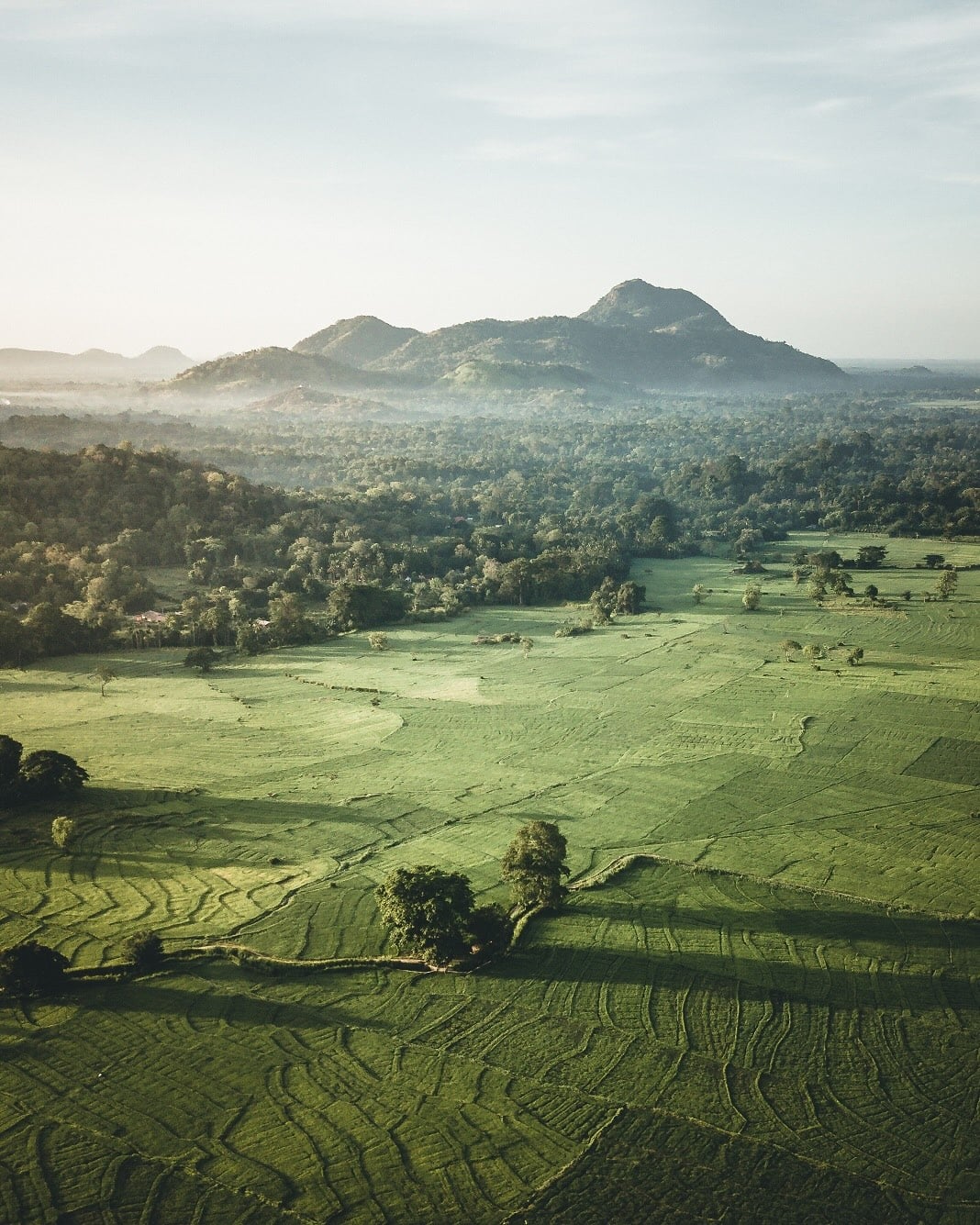
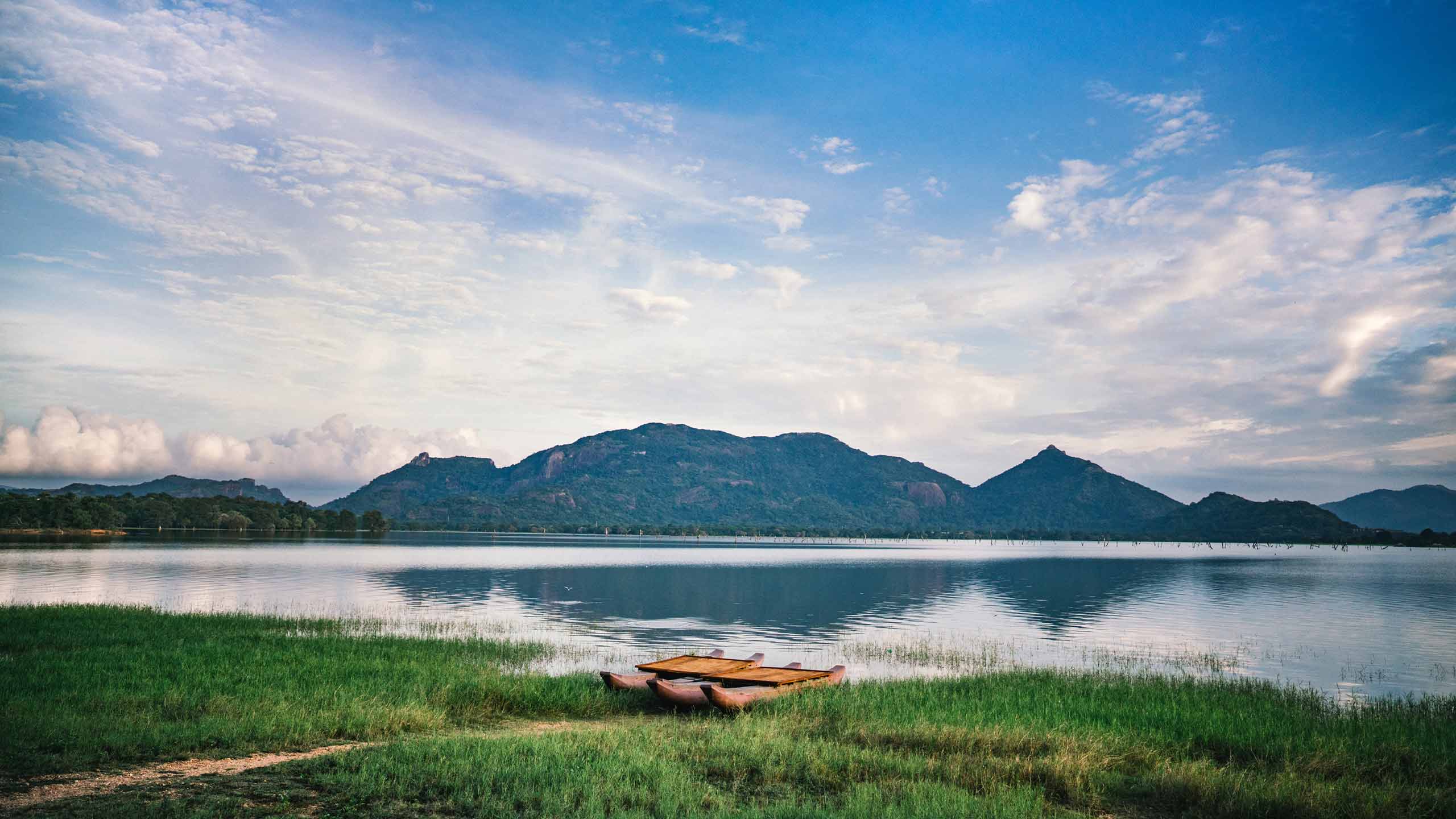
The Cultural Triangle has brought Sri Lanka’s history alive in the most enthralling manner for millions of travellers. It covers the north central towns of Anuradhapura, Polonnaruwa, Sigiriya and Dambulla where extensive archeological ruins provide a glimpse into the island’s, dating back to the 4th century B.C. It is here that Sri Lanka’s kings developed remarkably advanced civilisations. The extensive archeological ruins of the Cultural Triangle are now protected by UNESCO as World Heritage sites. The central plains have low rainfall and several hotels are sumptious enough to provide a holiday in their own right.
Don’t Miss
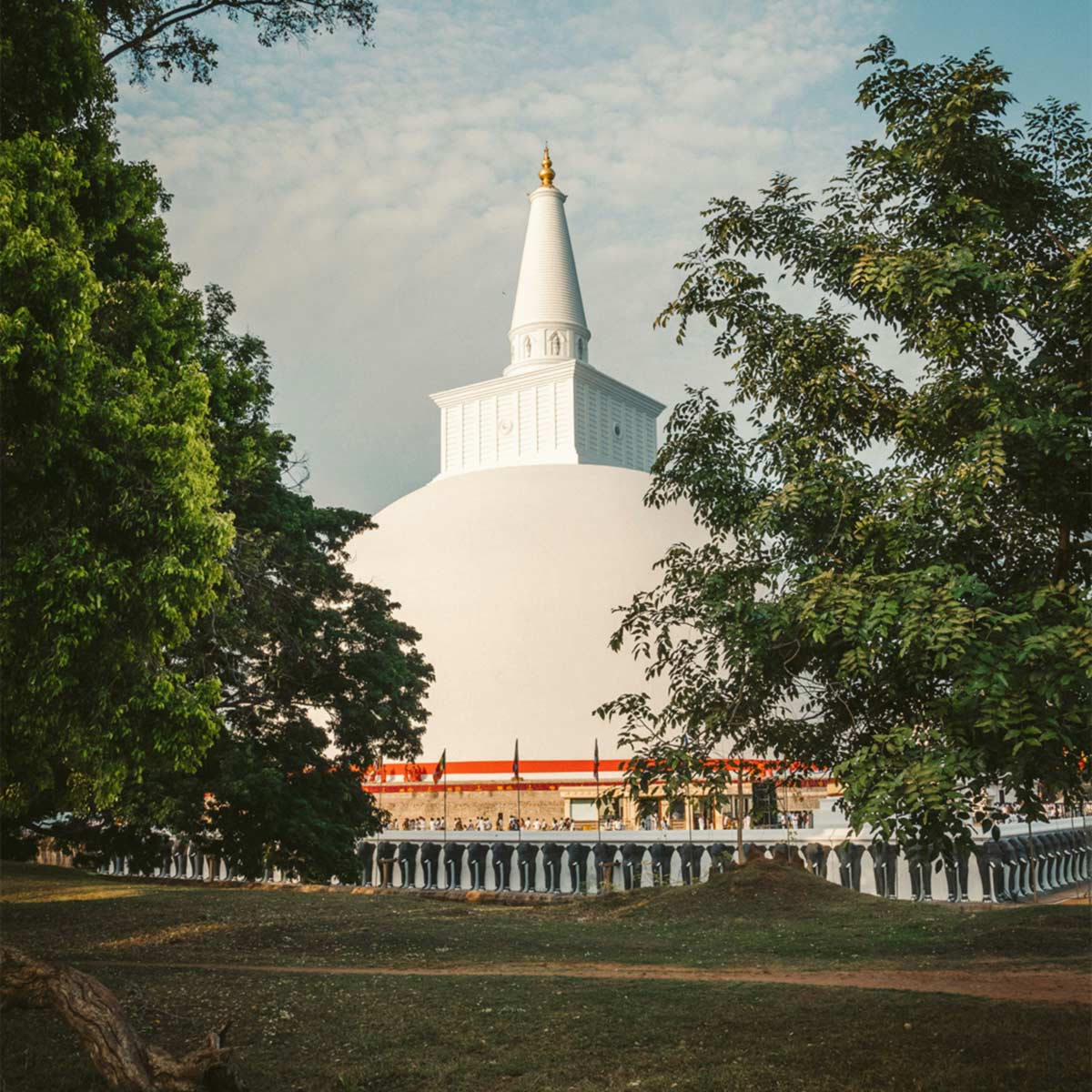
The extensive ruins of the former capitals, Anuradhapura and Polonnaruwa
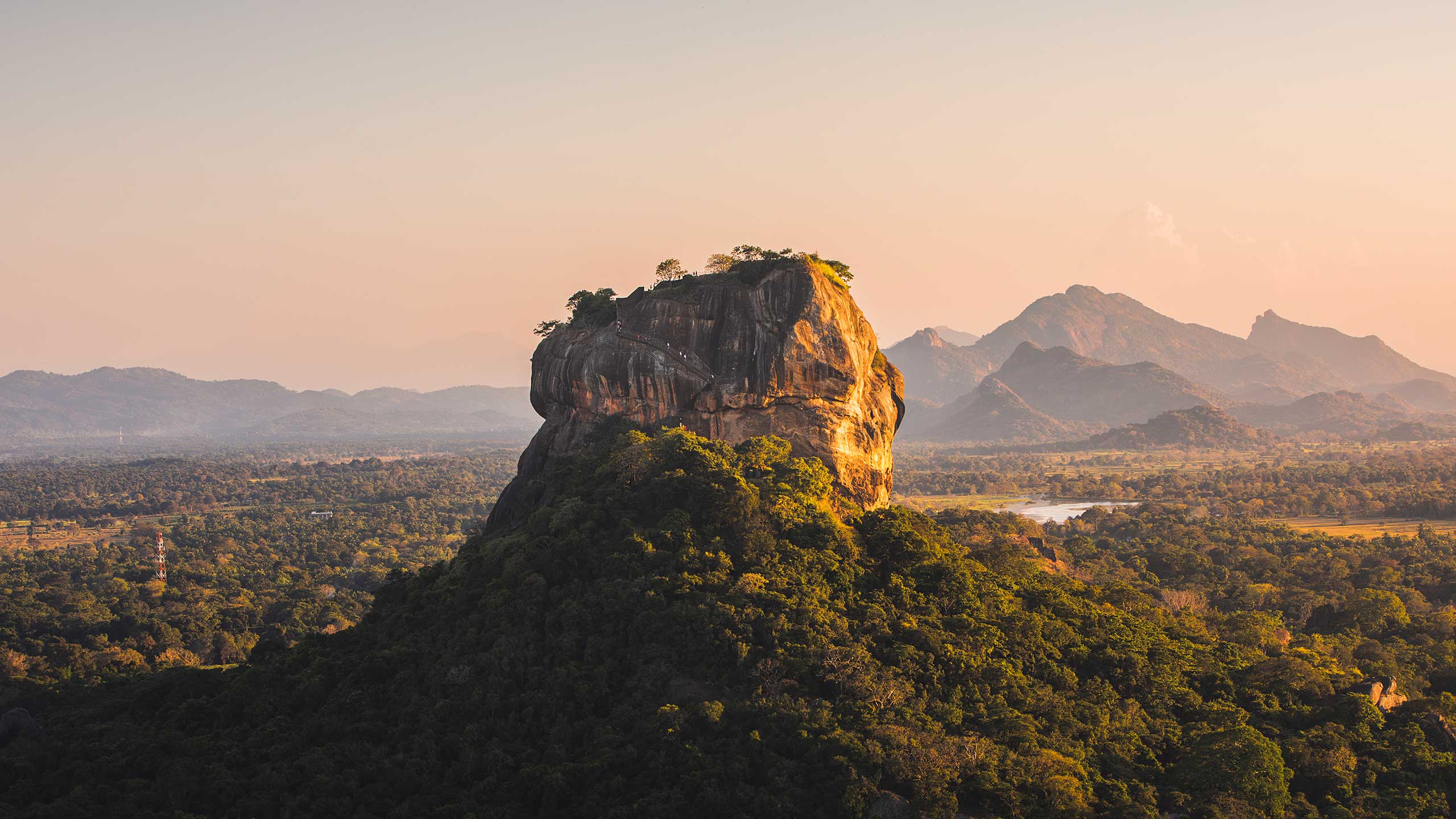
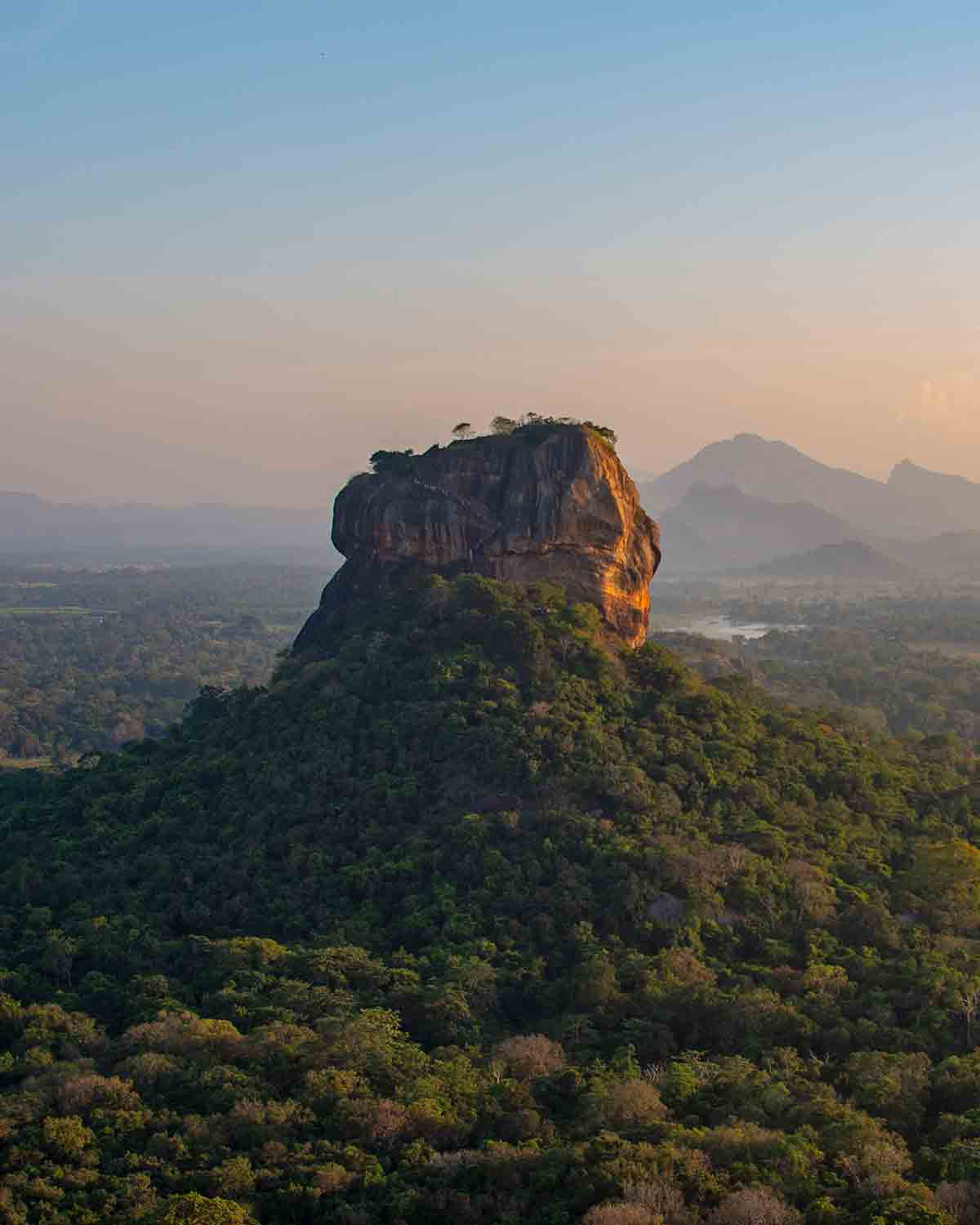
The climb up the giant rock fortress of Sigirya
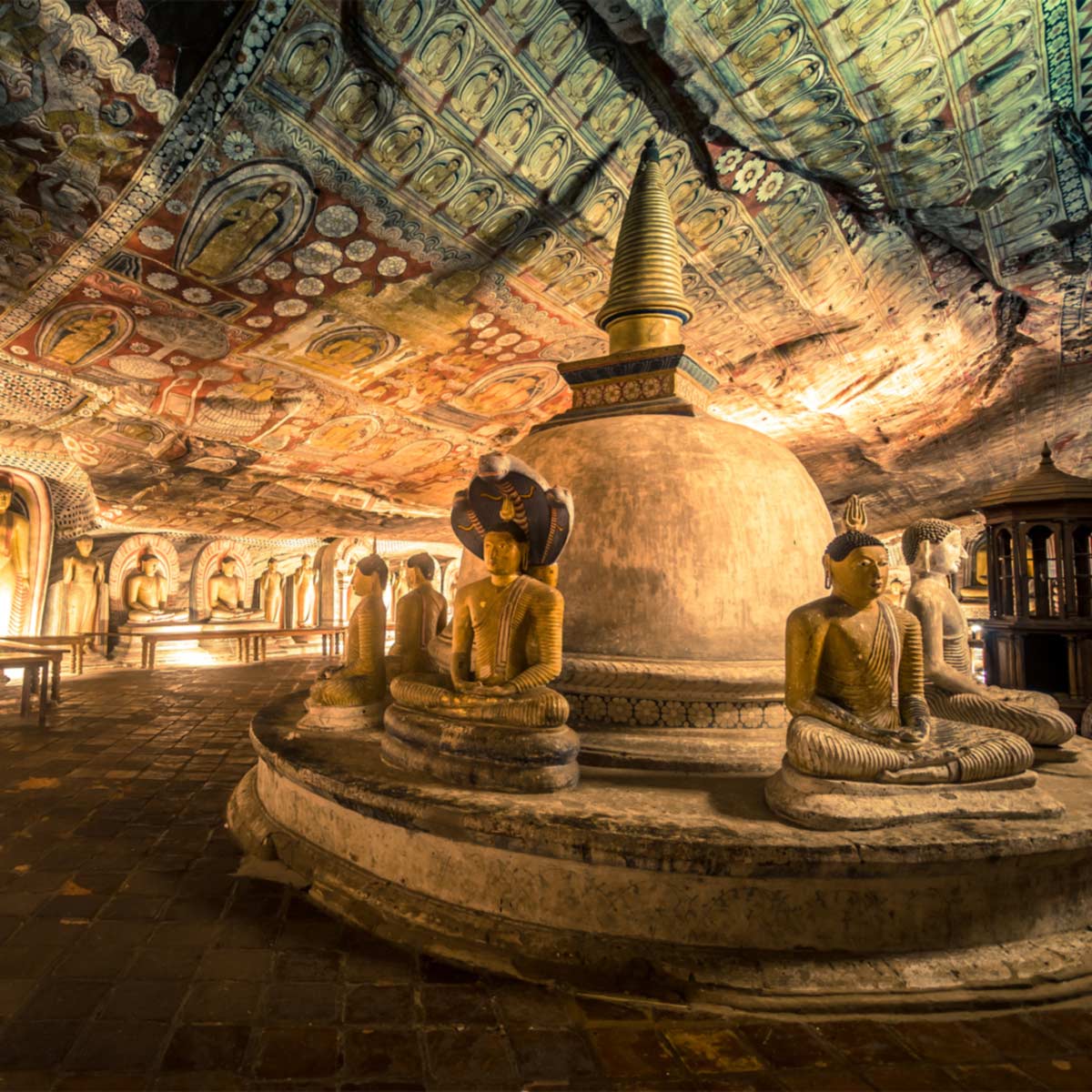
Dambulla’s cave paintings and Buddha statues
Vesak in Mihintale
Elephants in Minneriya
Elephant trek in Habarana
The wooded walk through the ruins of Ritilgala
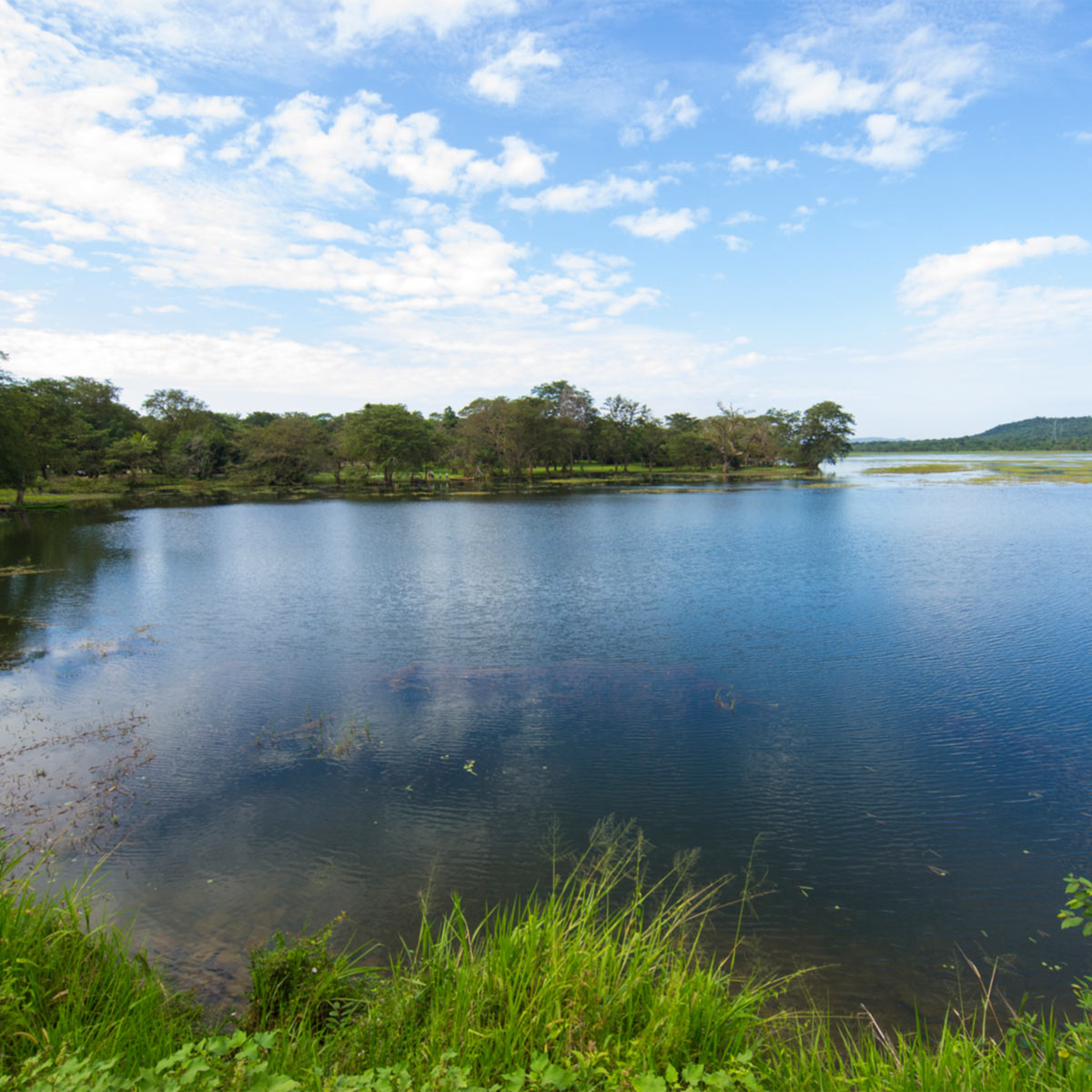
Cycling on peaceful minor roads by lakes and paddy fields.
Sri Lanka Map
Photo Gallery
Video Gallery

Getting There
The cultural triangle can be reached directly from Colombo, although from the airport it may be advisable to head via back roads to Kurunegala, avoiding the main Kandy road at busiest times. The quickest way to Anuradhapura is beyond Negombo up the north-west coast. The route from Kandy takes you via Matale. Useful drive times:  Colombo to Habarana (4-5 hours); Airport to Habarana (4 hrs); Colombo to Dambulla (3.5 hrs); Dambulla to Polonnaruwa (2 hrs); Airport to Anuradhapura (4 hrs). Habarana to Dambulla (1 hour); Kandy to Dambulla (2 hrs).

Historical Background
The Cultural Triangle tells of Sri Lanka’s prestigious place in world history. The area is found on Sri Lanka’s central plains and encompasses the towns of Anuradhapura, Polonnaruwa, Sigiriya, and Dambulla. It is here that the country’s great kings including Vijaya, Pandukabhaya, and Devanam Piyatissa gave rise to a great civilization that was based on agriculture and Buddhism.  These enlightened kings also treasured the ancient healing wisdom of Ayurveda, which to this day continues to be the preferred form of preventive and curative health care in the rural areas. Anuradhapura, Sri Lanka’s first capital, was the greatest monastic city of the ancient world and was ruled from the 4th century B.C. to 11th century A.D. by more than 100 Sri Lankan kings.  Polonnaruwa became Sri Lanka’s royal medieval capital in 1073 where the Sinhalese king Vijayabahu I followed by Parakramabahu I, were the main driving force behind the city’s development.  It remained Sri Lanka’s capital until the late 13th century.  Another significant event in Sri Lanka’s history is the introduction of Buddhism to this island in 247 BC.  Mihintale, where King Devanampiya Tissa chose the path of Buddhism for this island nation, is especially inspiring on a full-moon Poya Day.

Sights
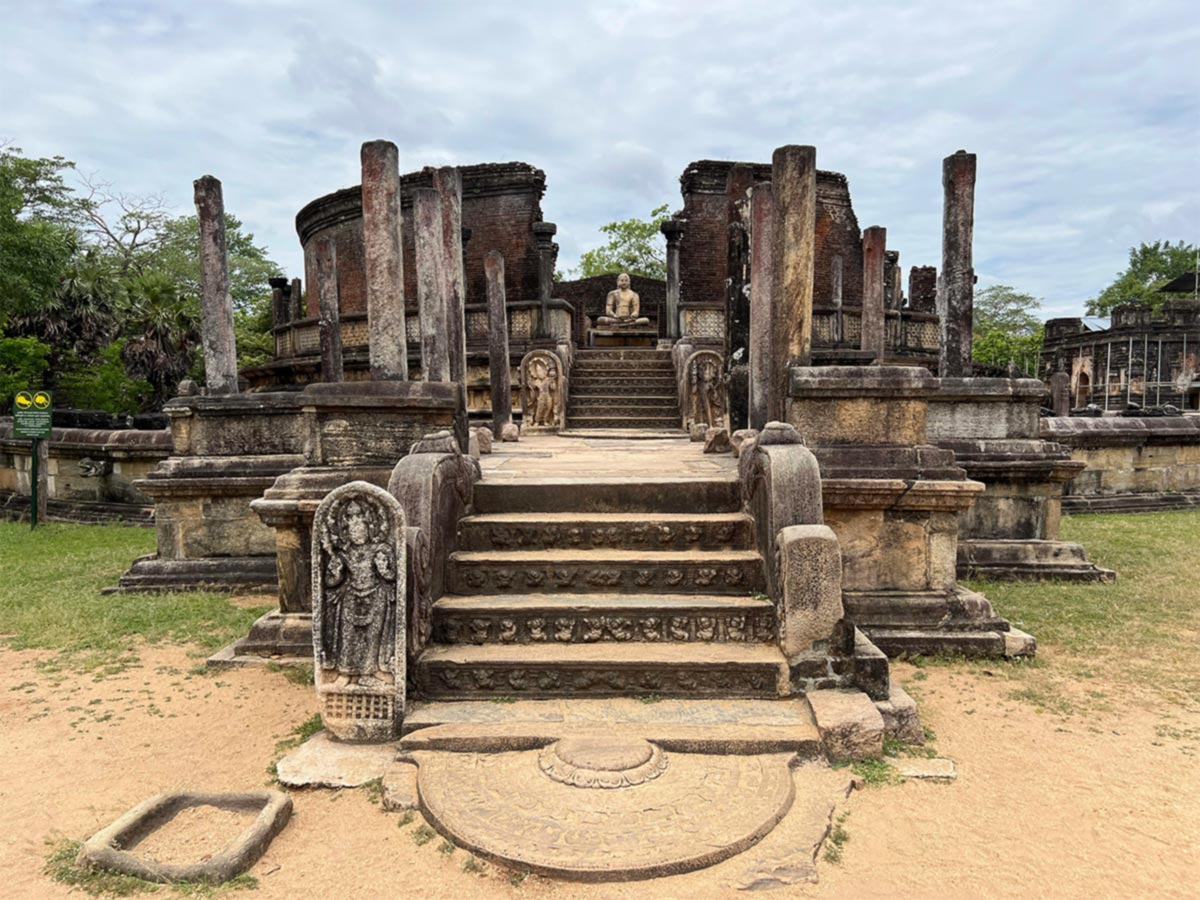
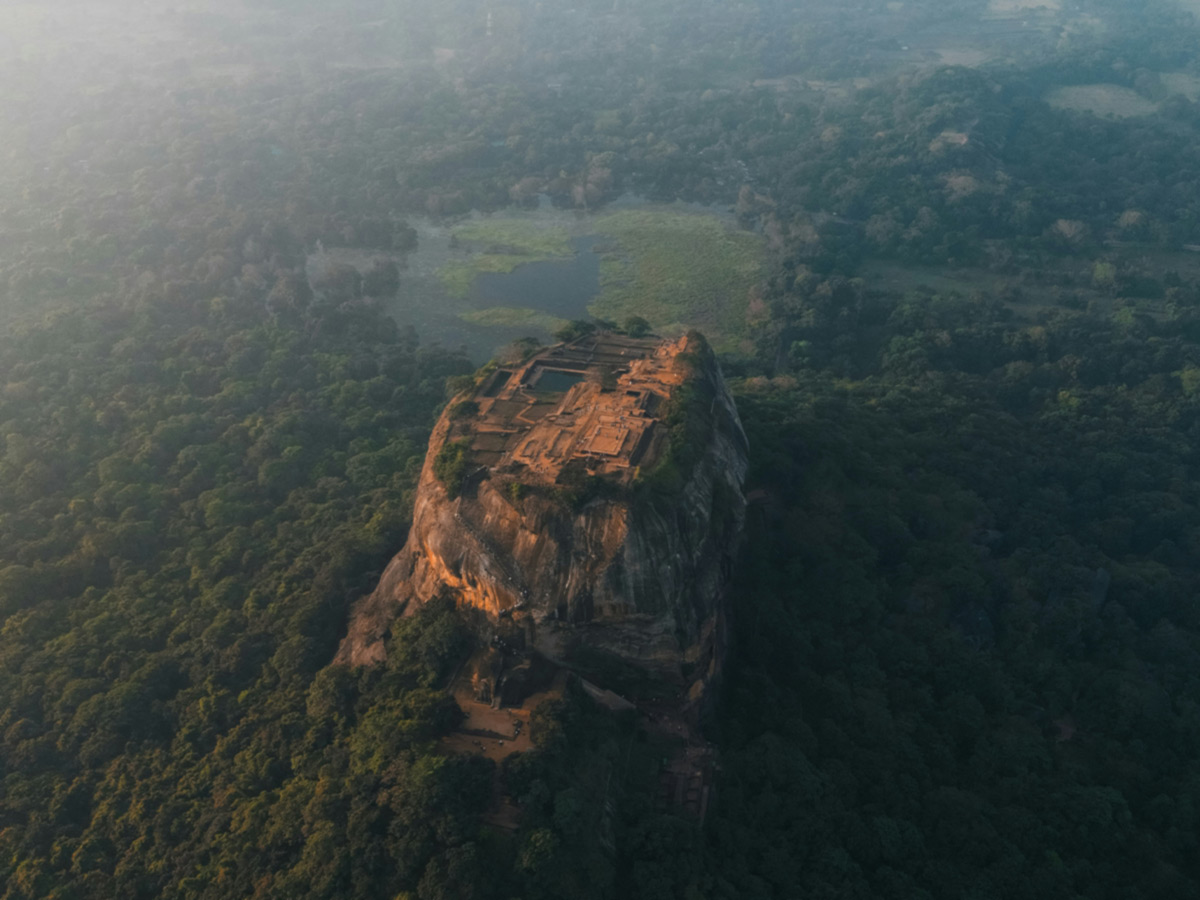
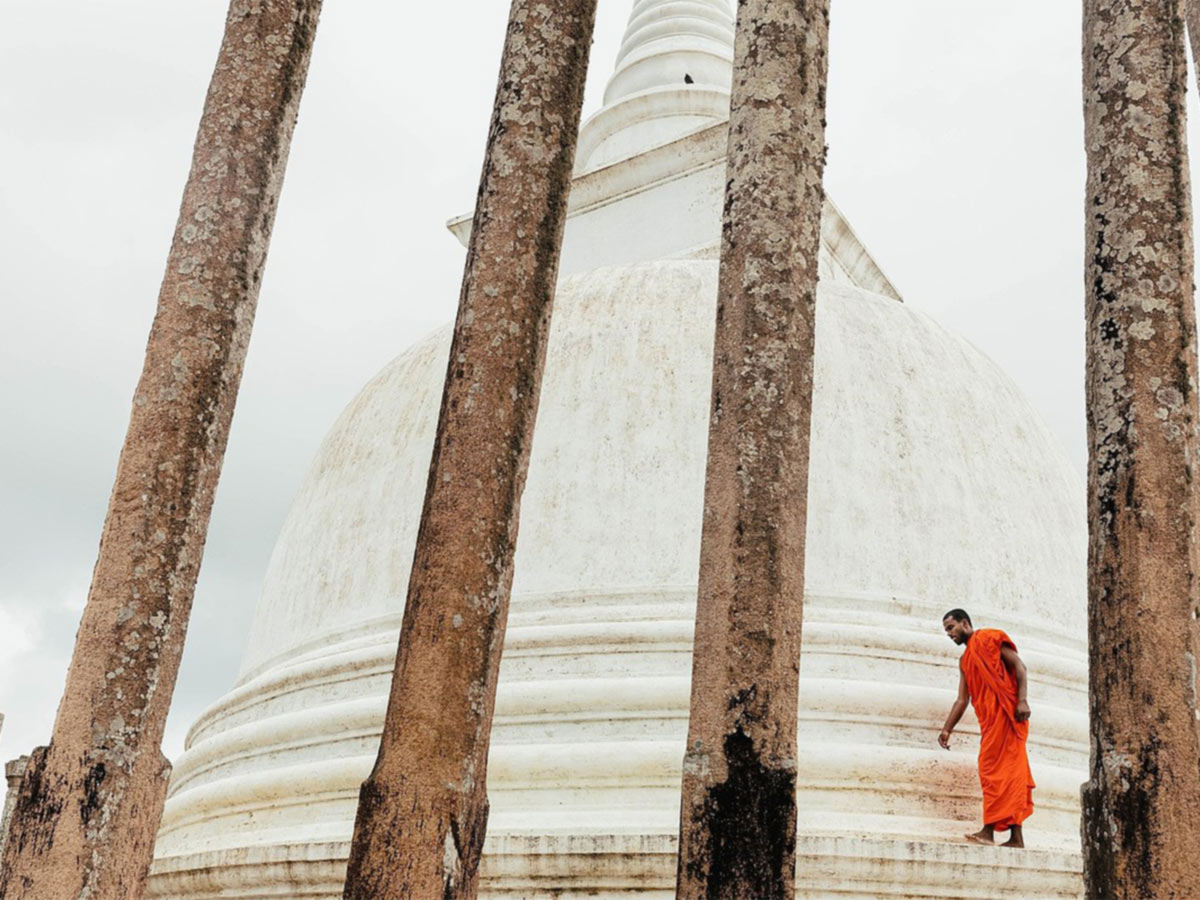
Ruins of the country’s first capital – Anuradhapura -- include a large number of sacred Buddhist sites including dagobas (gigantic dome-like structures), monasteries, palaces and the ancient Bo Tree, grown from the original tree in Buddha Gaya under which Lord Buddha attained enlightenment.  Mihintale, where Buddhism originated on the island in 247 BC is especially inspiring on a Full Moon Poya Day.  There is air of serenity as hundreds of people congregate in silent prayer, the statues are surrounded with flowers and the air is scented with incense and burning aromatic oils.  Polonnaruwa’s ruins include the magnificent sculptures of Lord Buddha at the Gal Vihara cut into Granite stone.  The archeological museum in Polonnaruwa provides a useful guide to this ancient kingdom. Dambulla’s ancient cave temple is a fascinating complex of Buddhist image houses.  Its rock ceiling, one large sweep of colorful frescoes, some of which date back to over 2,000 years, depicts Buddhist mythology and the tales of the Buddha's previous births.  Sigiriya, located close to Dambulla, is one of the most dramatic and inspiring historical sites in the world. A mythical past of feuding dynasties enhances Sigiriya’s striking setting, which was built in 5th century AD by king, Kasyapa, as a fortress palace on top of the imposing Sigiriya rock. Worthy of being called the “8th wonder of the world”, Sigiriya will astonish with its beautiful views, staggering engineering and peerless design.

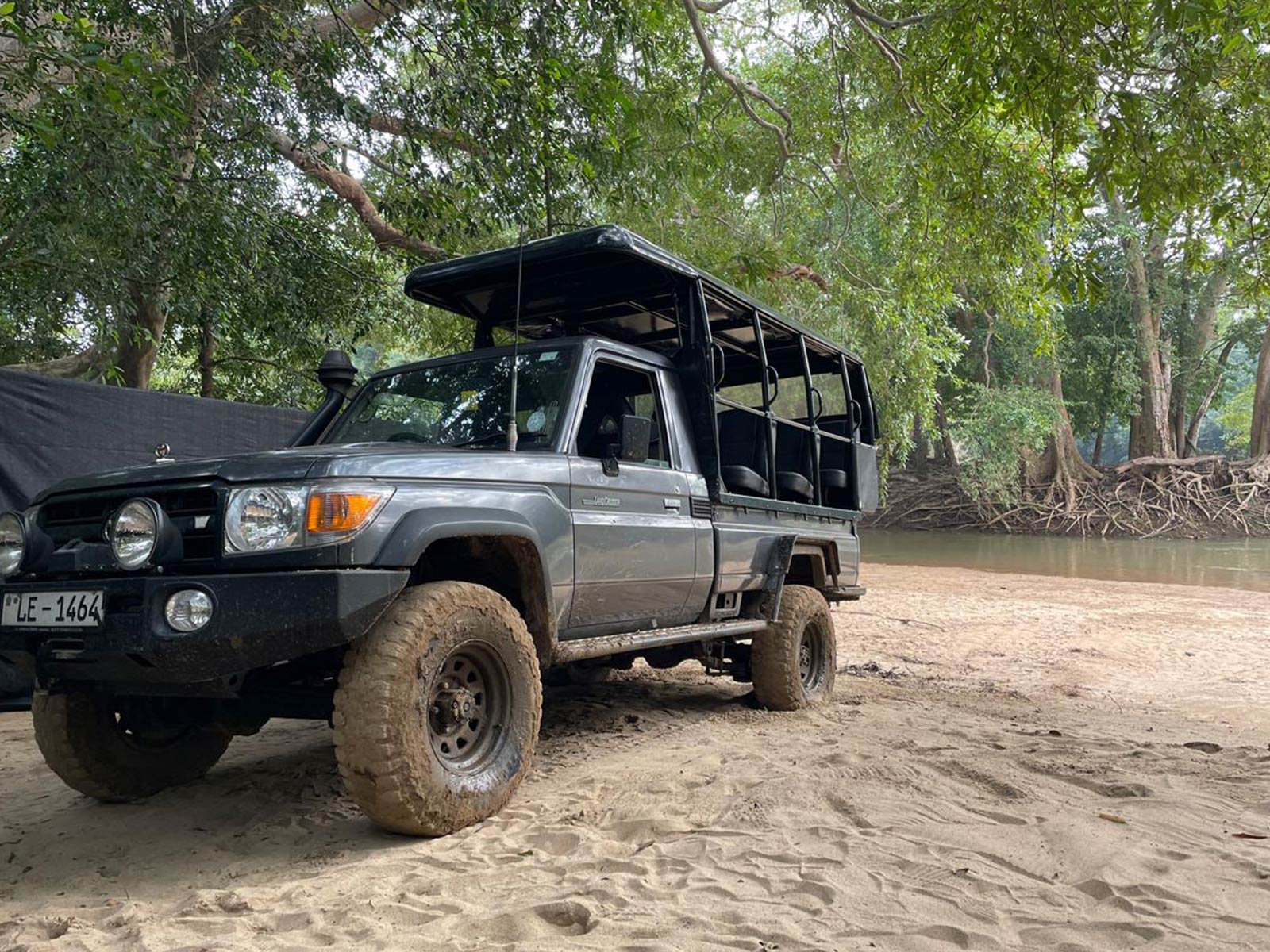
For those wanting wildlife along with cultural heritage, there are the neighbouring game parks of Minneriya and Wasgomuya.  These parks attracts herds of up to 150 elephants.  Jeep safaris can be organised in the early morning or at dusk. Cycling excursions can be organised and natural trails can be explored on foot.

Accommodation
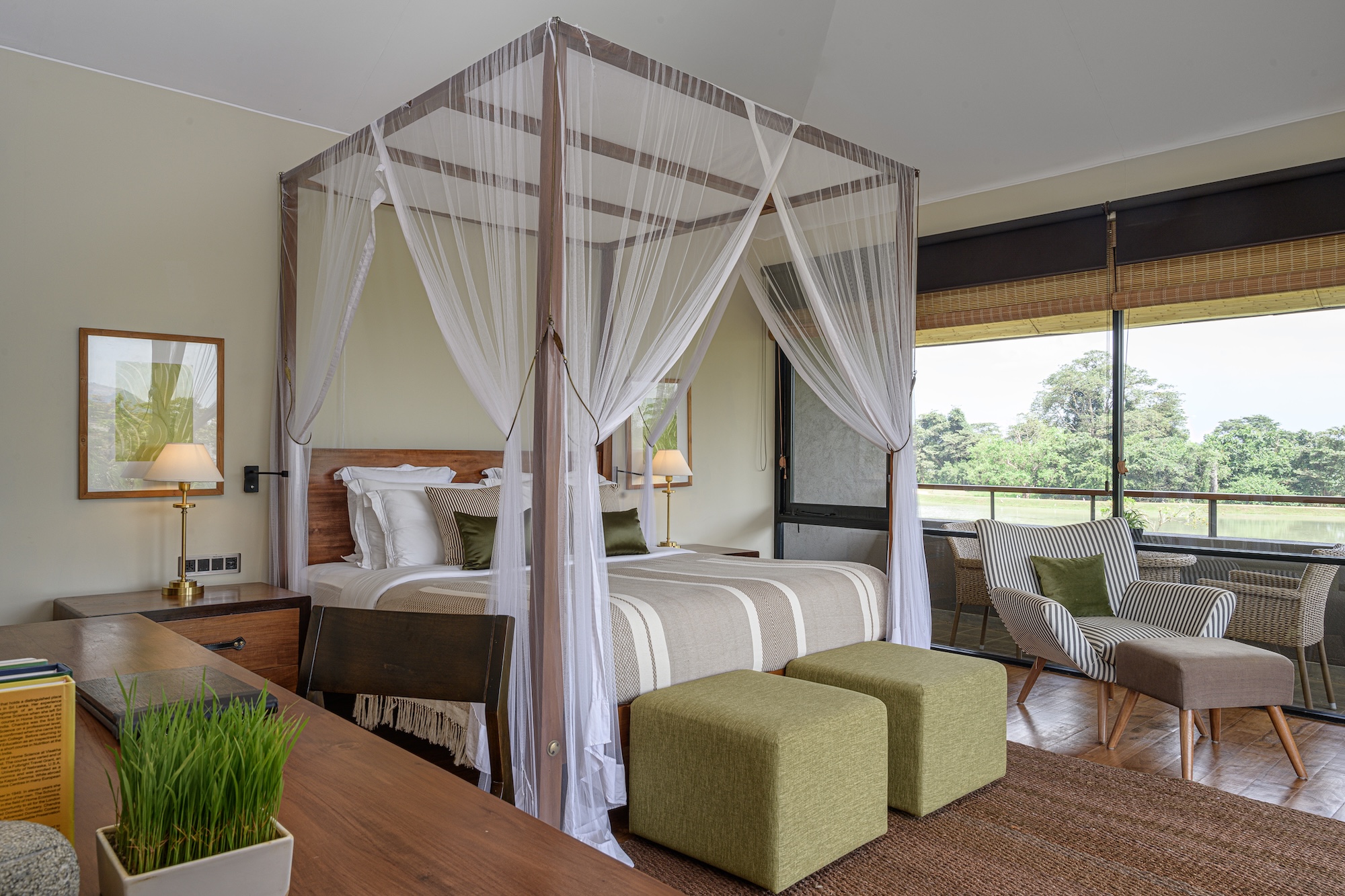
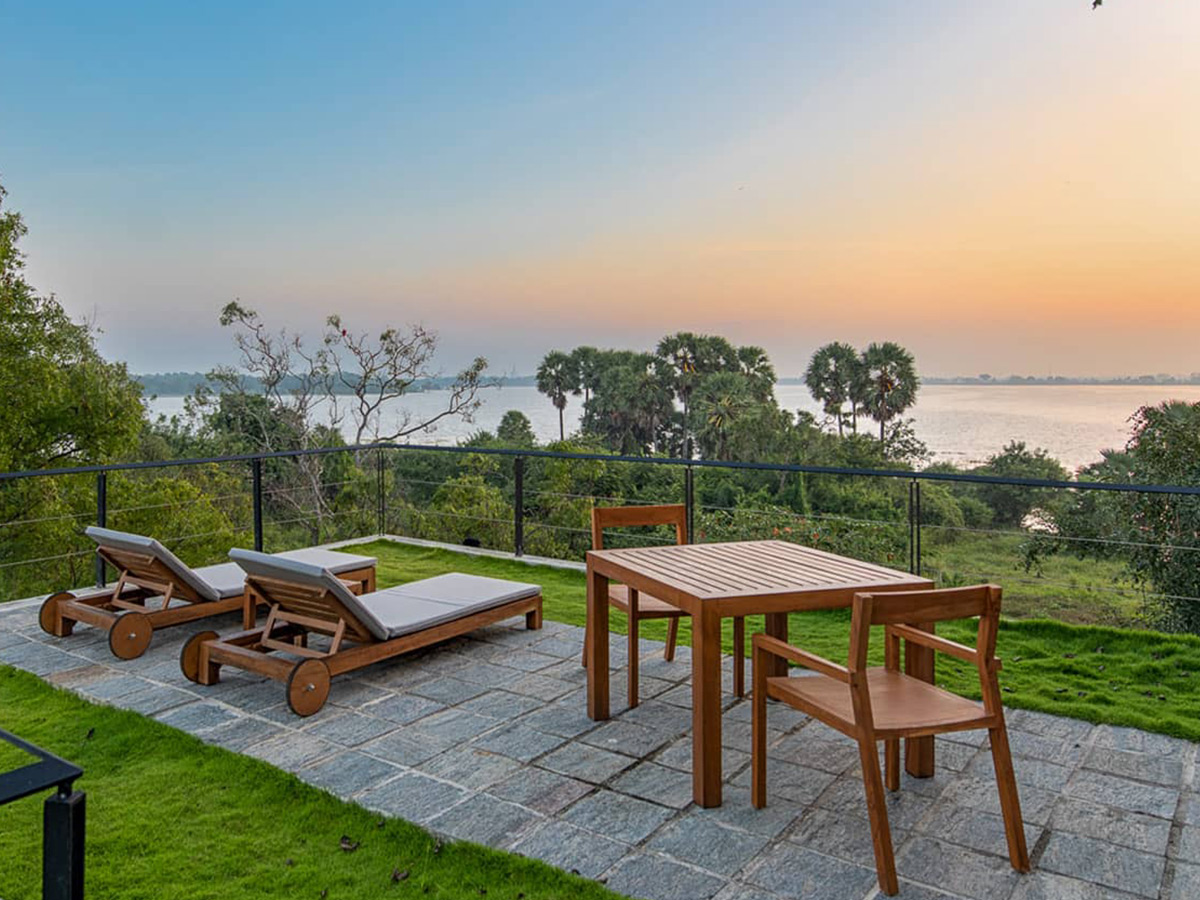
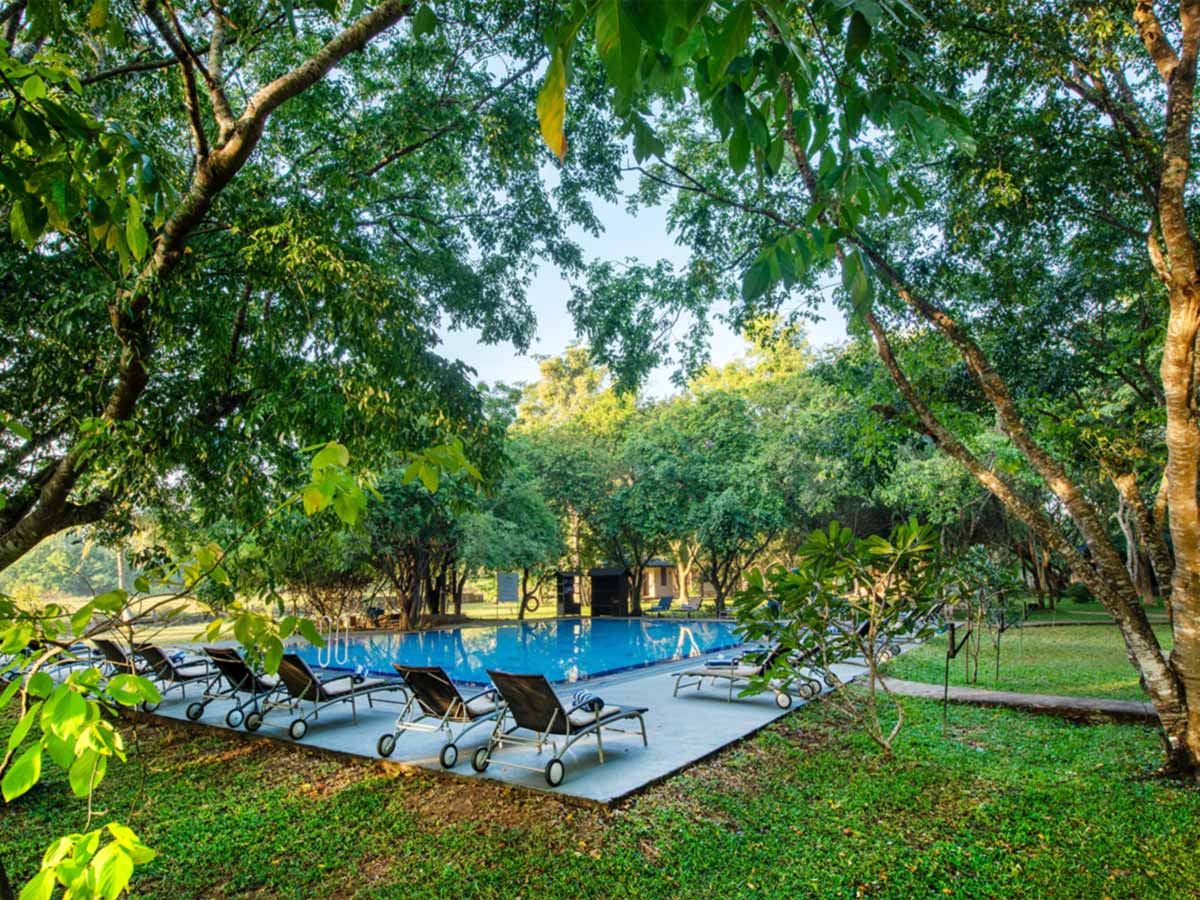
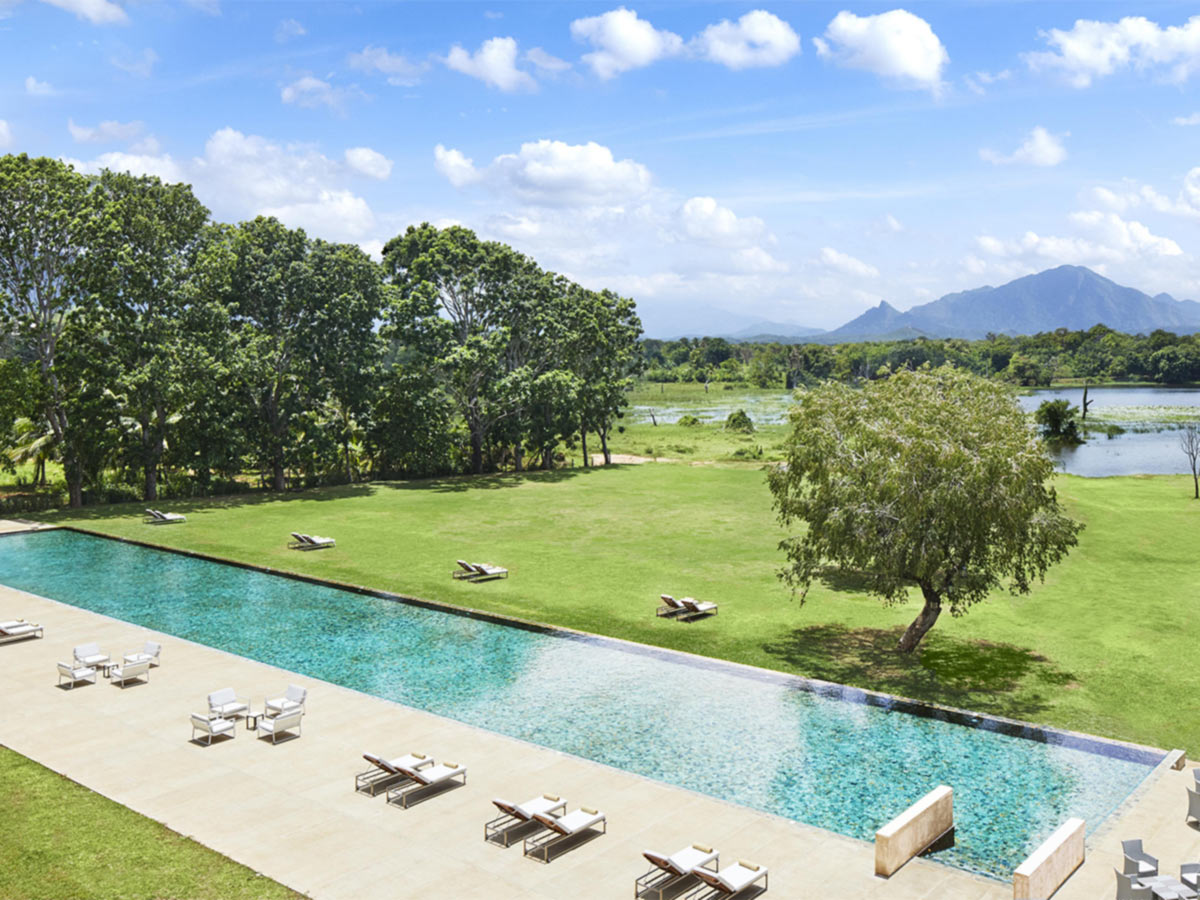
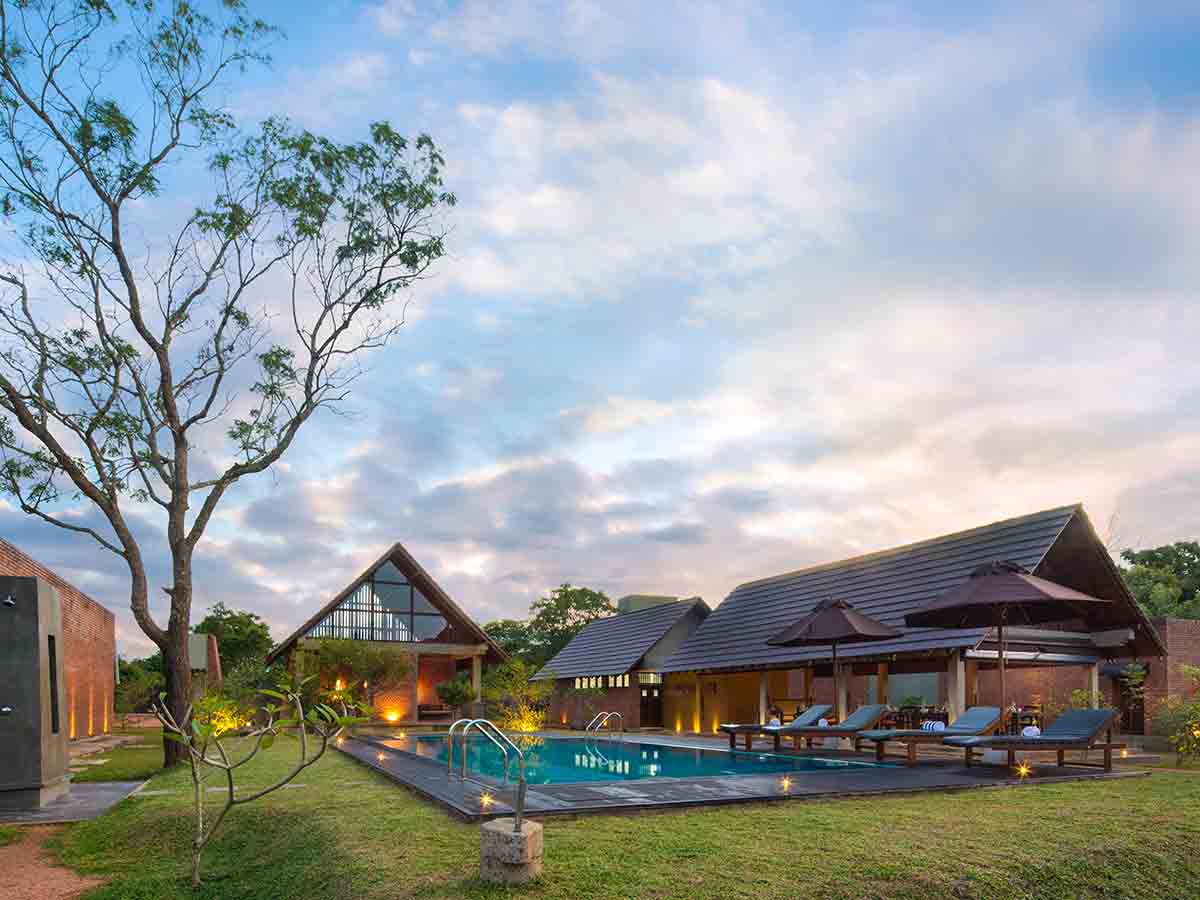
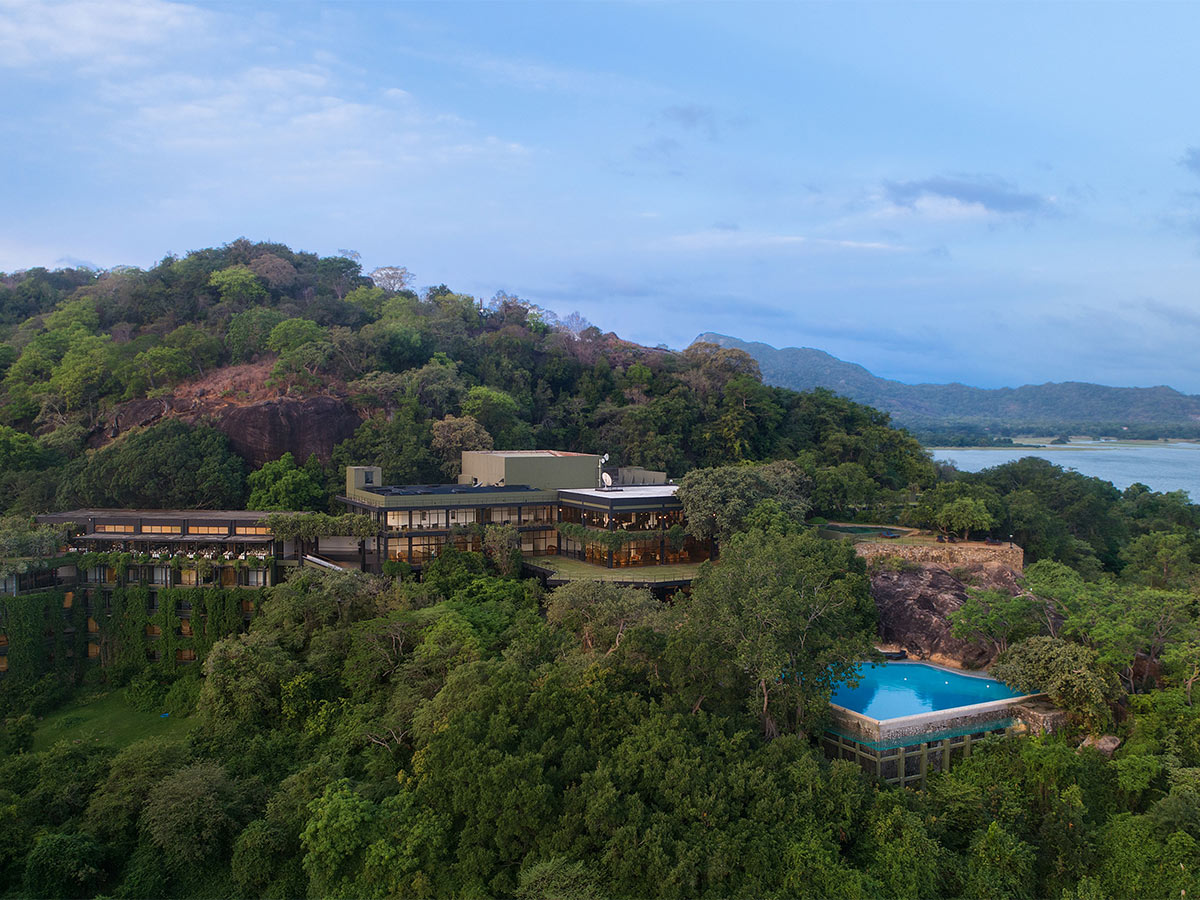
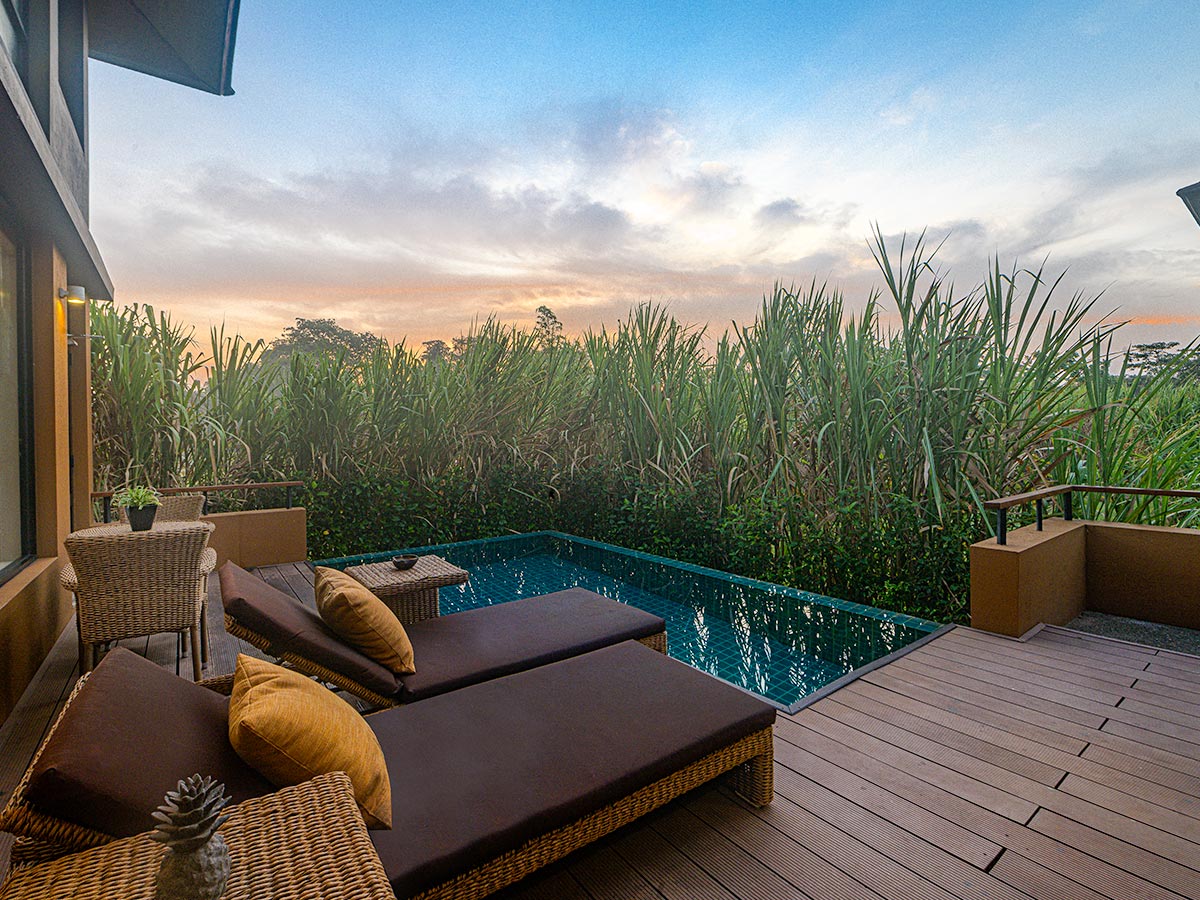
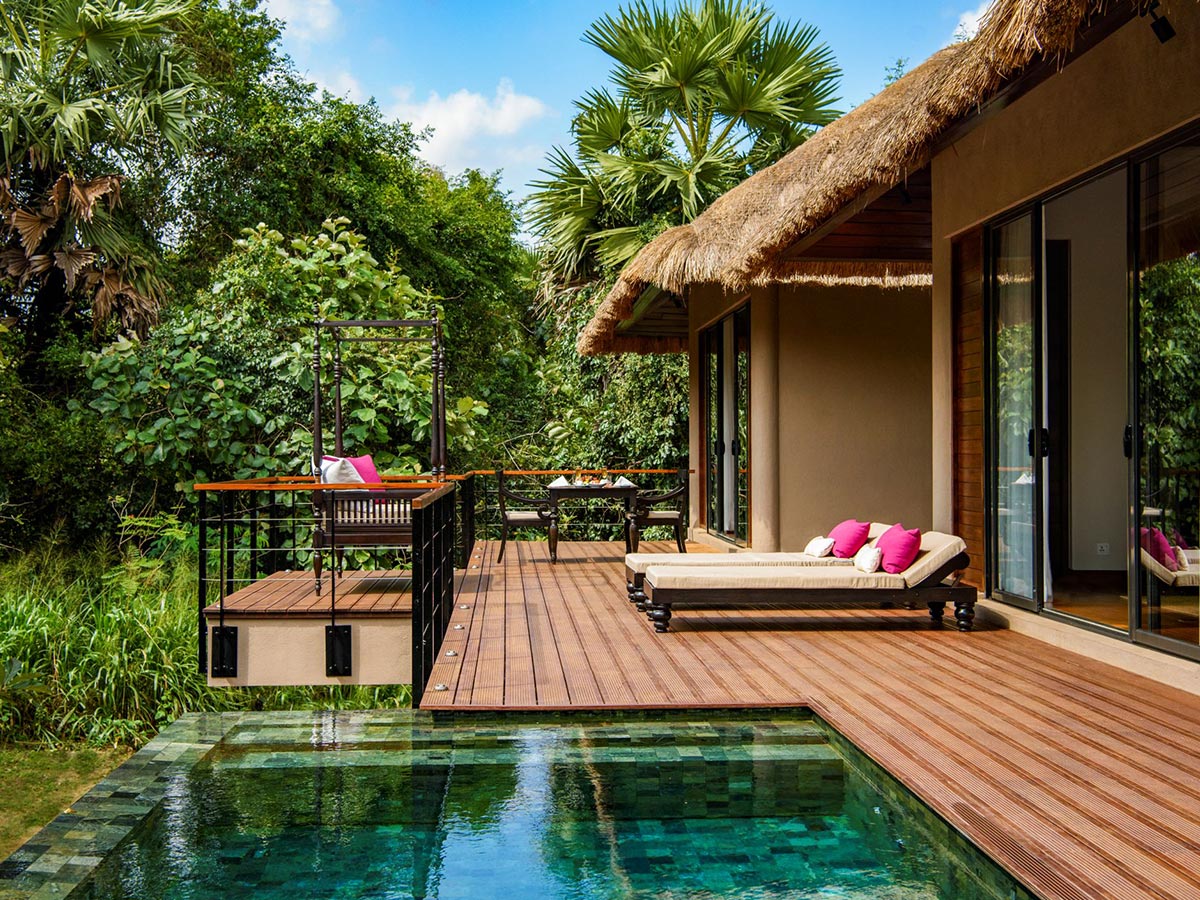
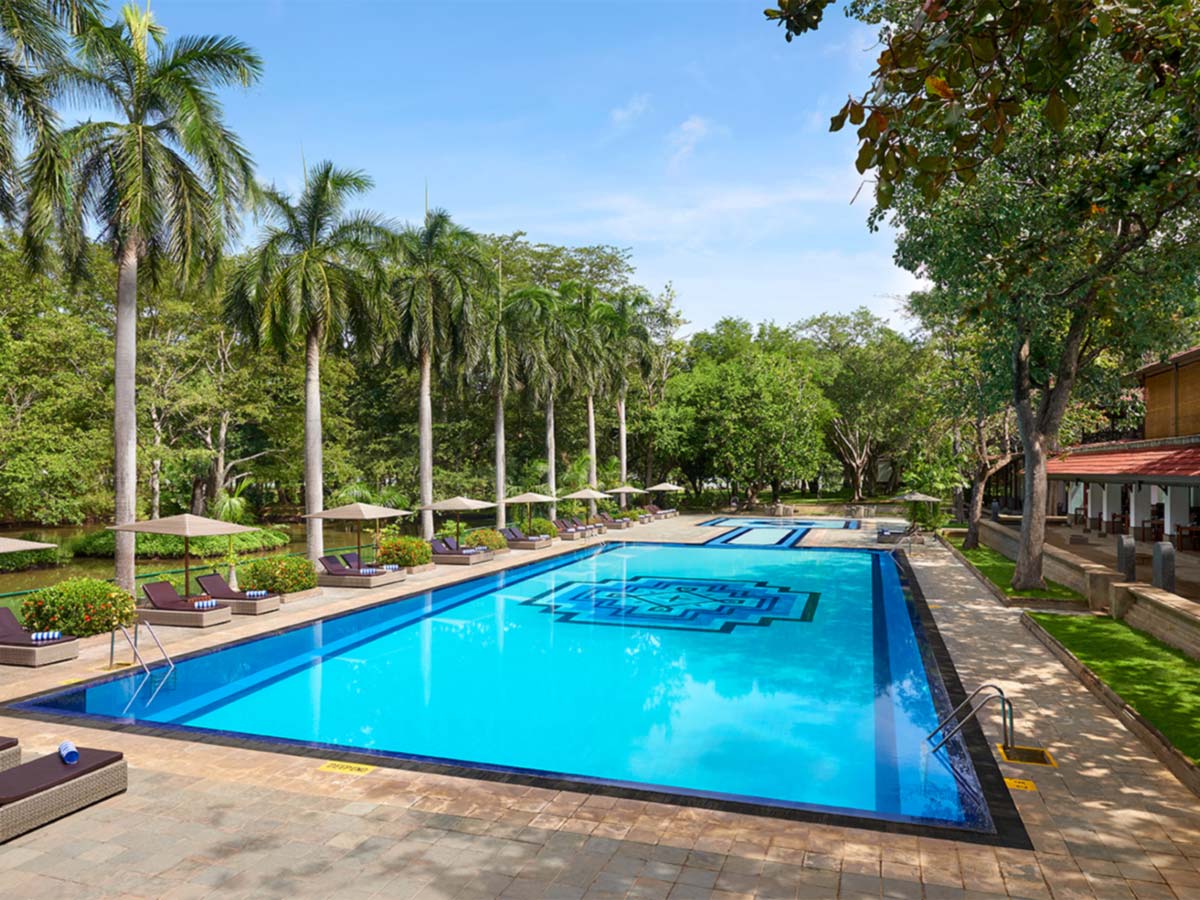
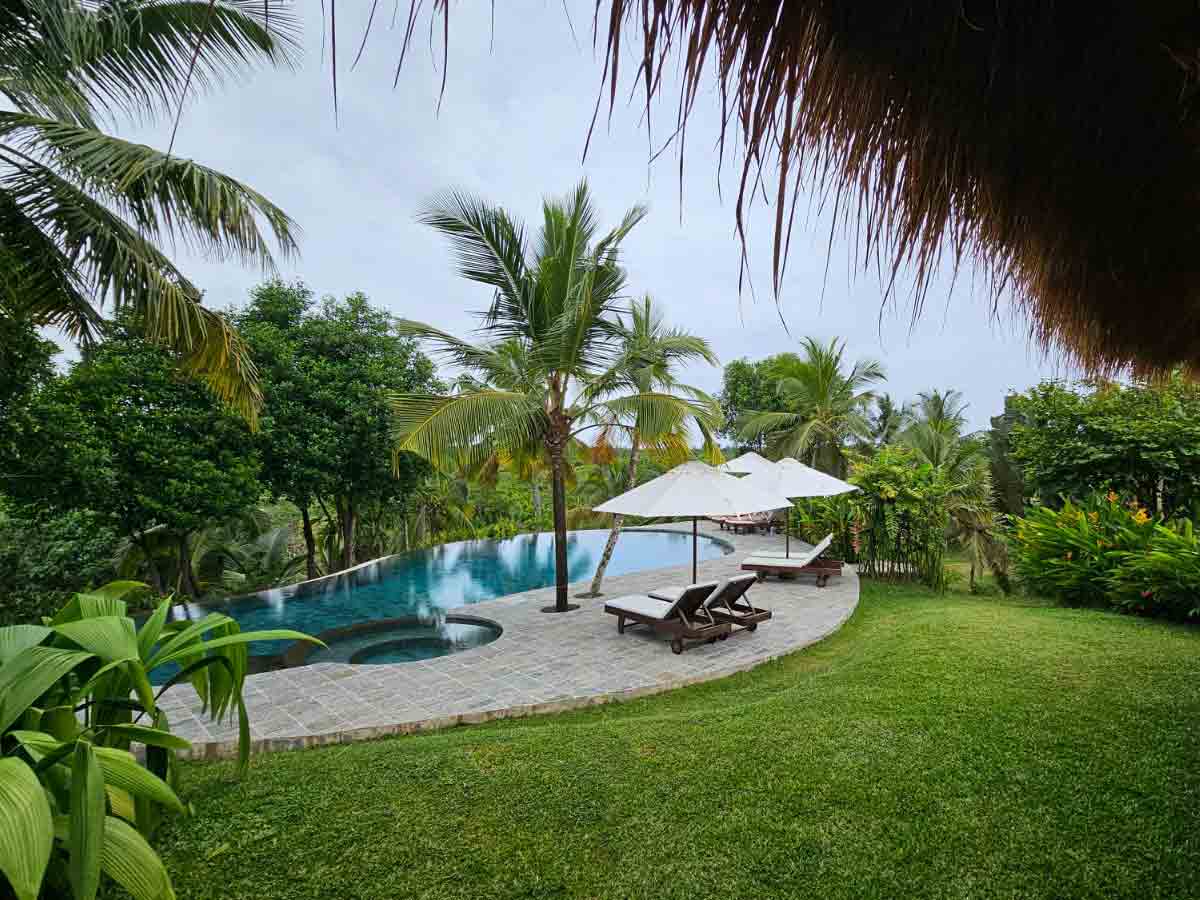
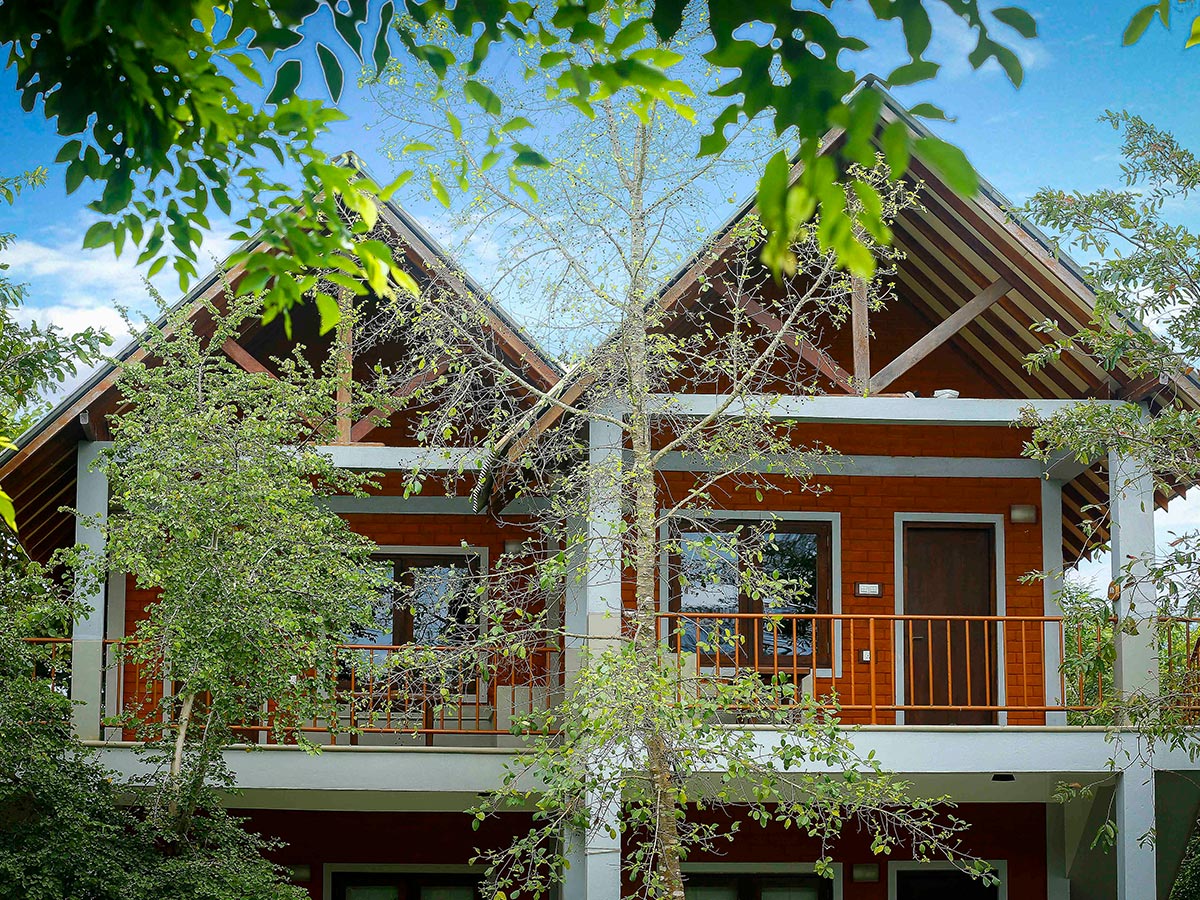
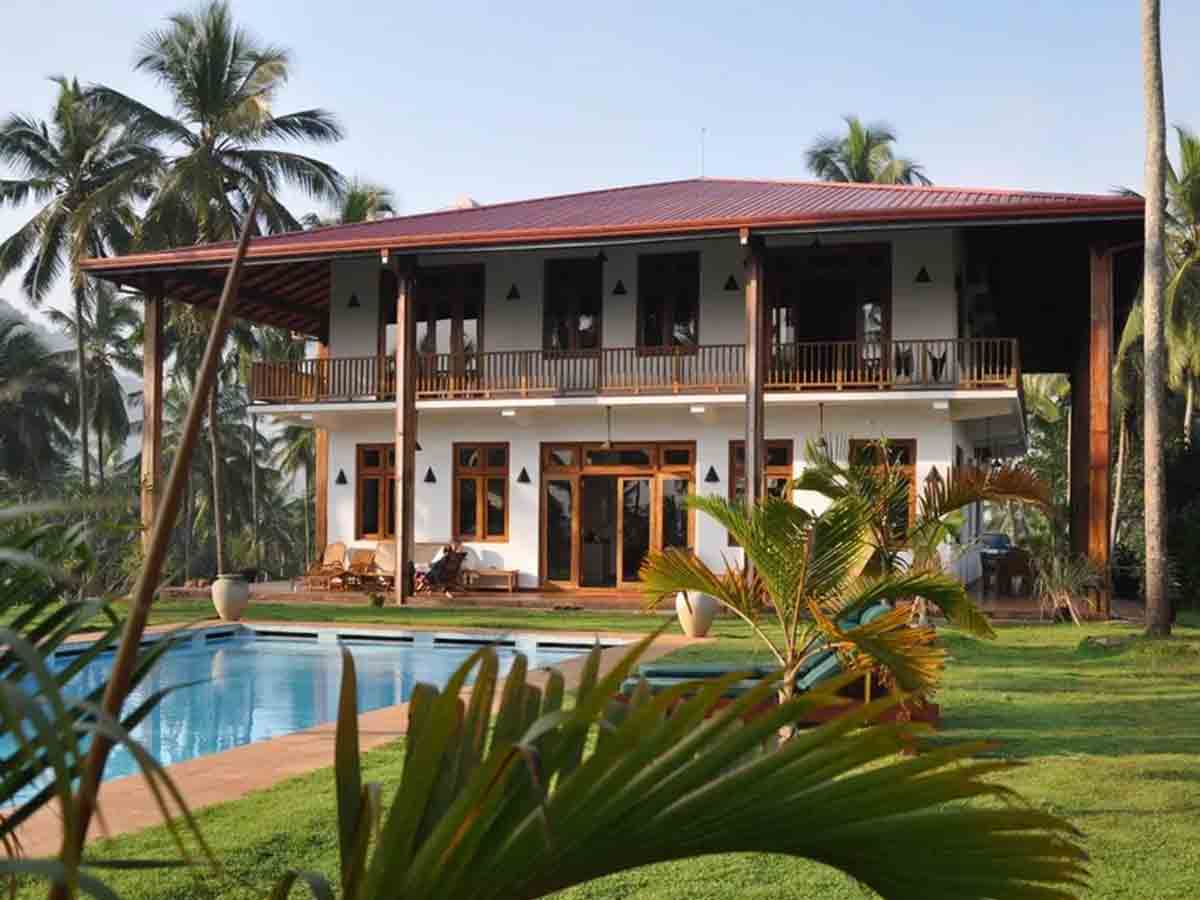
Sri Lanka’s cultural triangle is blessed with wonderful hotels, all possessing an individual atmosphere that deserves a longer stay than many package tourists allow. Heritance Kandalama, a creation of the late Geoffrey Bawa, Sri Lanka’s most iconic architect, overlooks the Kandalama Lake and has a slightly formal air in a rural setting that for many makes it the market leader. It is being challenged for that accolade by the luxurious Vil Uyana, a sprawling lifestyle boutique hotel and eco retreat which is also highly recommended.  Elephant Corridor, close by, seeks similar standards of five-star eco. All are convenient for Mount Sigiriya, as are the traditional 3-star, Sigiriya Village, Amaya Lake, a mid-range cabana-style hotel alongside Kandalama Lake with a laid-back feel, and Lion Rock Hotel, the ideal choice for those seeking a small independent property, well run at keen prices. Giritale offers the boutique-style Deer Park Hotel, from which point the ruins of Polonnaruwa as well as the Minneriya National Park can easily be accessed; Royal Lotus, a cheaper more traditional option is nearby and gets sound feedback.  Habarana offers the five-star Cinnamon Lodge and its sister property, the mid-range Chaaya Village, both with a wonderful lakeside setting which makes then perfectly satisfying choices. The Thilanka Resort & Spa is the only accommodation within Dambulla and this boutique-style hotel is located within walking distance to the Dambulla cave temple. Anuradhapura’s best accommodation option by far is Palm Garden Village, which has the air of a colonial club, although it is a drive south towards Wilpattu game park. Those wishing to remain central might consider the colonial-style Tissawewa Grand Rest House – a budget/mid-market hotel with few pretnsions but views of the ancient Tissawewa Reservoir. The Dunvila Cottage, a rustic guest house set amidst the wilderness, will appeal to nature lovers wanting solitude near the Wasgomuva National Park.

Food & Drink
Sri Lankan rice and curries and western cuisine is served in all the hotels within the Cultural Triangle.  Heritance Kandalama is highly regarded for its award-winning cuisine ranging from lunch time buffets to fine dining.  Vil Uyana’s Apsara restaurant with views of the Sigiriya rock, offers a la carte menu as well as a vegetarian menu. Mid-range hotels tend to rely largely on buffets; Chayya Citadel’s wide choice and good quality gets excellent feedback. More details are in our hotel profiles. There are several wayside eateries and stalls on the way to the Cultural Triangle where a cup of tea or a Thambili (king coconut) – a great thirst quencher, or a cool drink can be purchased.

Shopping
The cultural triangle is not the area to plan a shopping expedition. Watermelon, pumpkin and other dry zone vegetables grown in village home gardens as are found in plenty in wayside stalls. Groceries, pharmacies, and banks are available in the main towns of the Cultural Triangle.  Buddha statues are available for purchase in Anuradhapura, Polonnaruwa and Dambulla.

Events
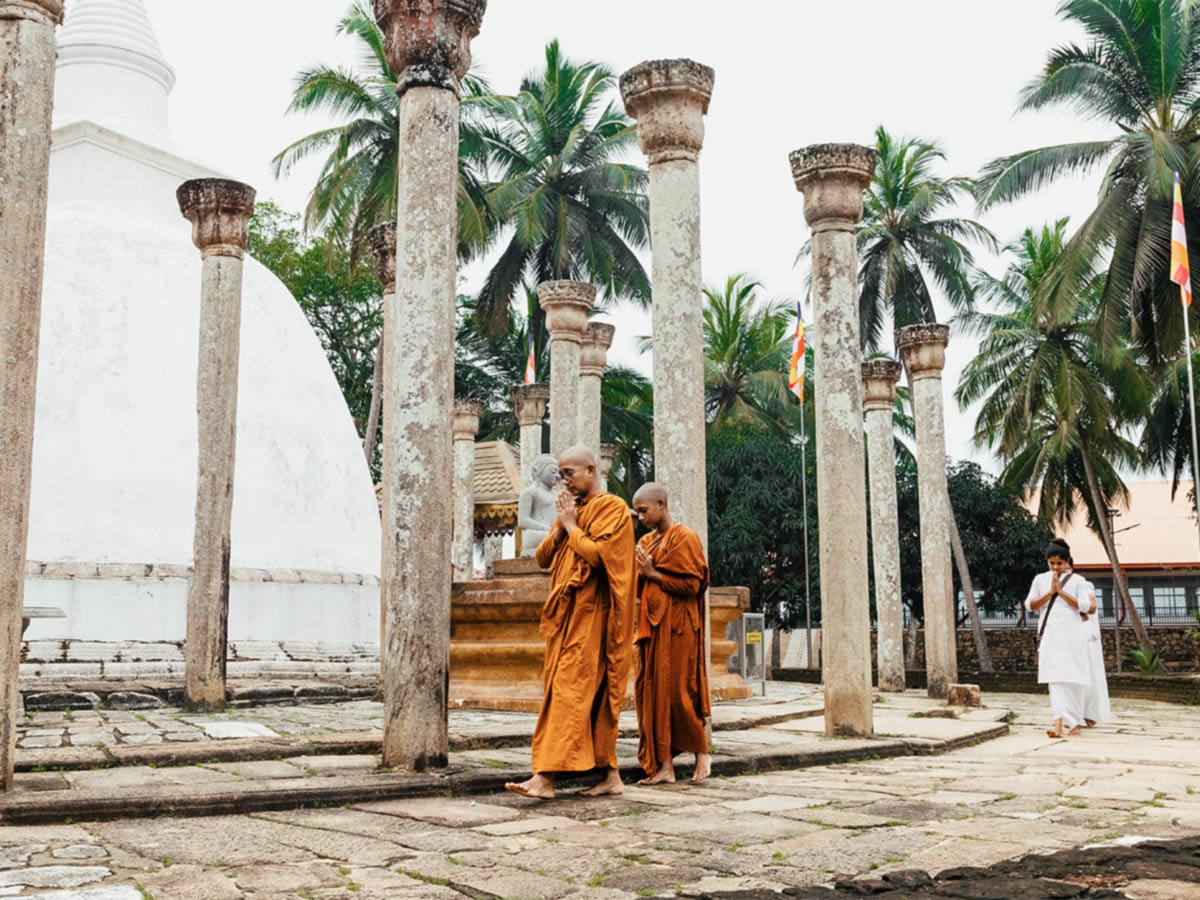
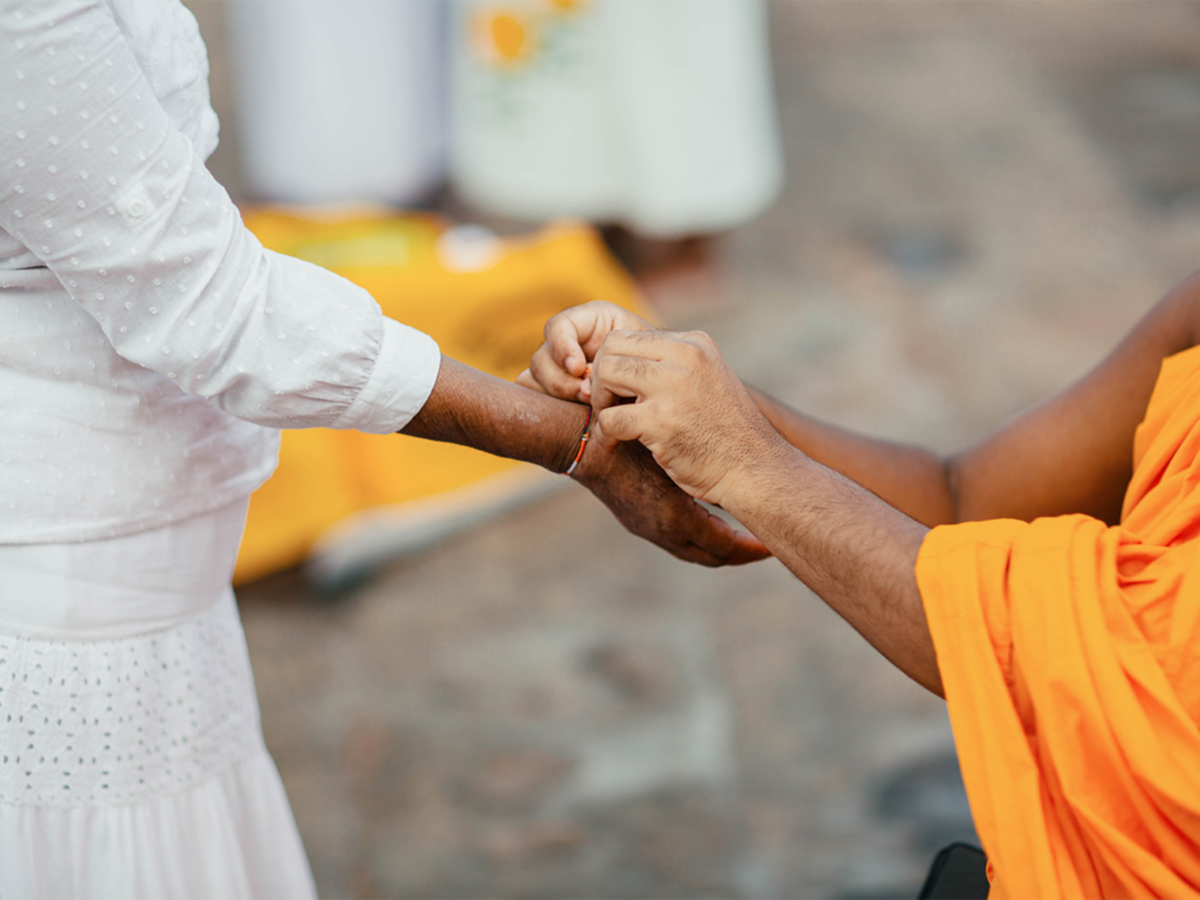
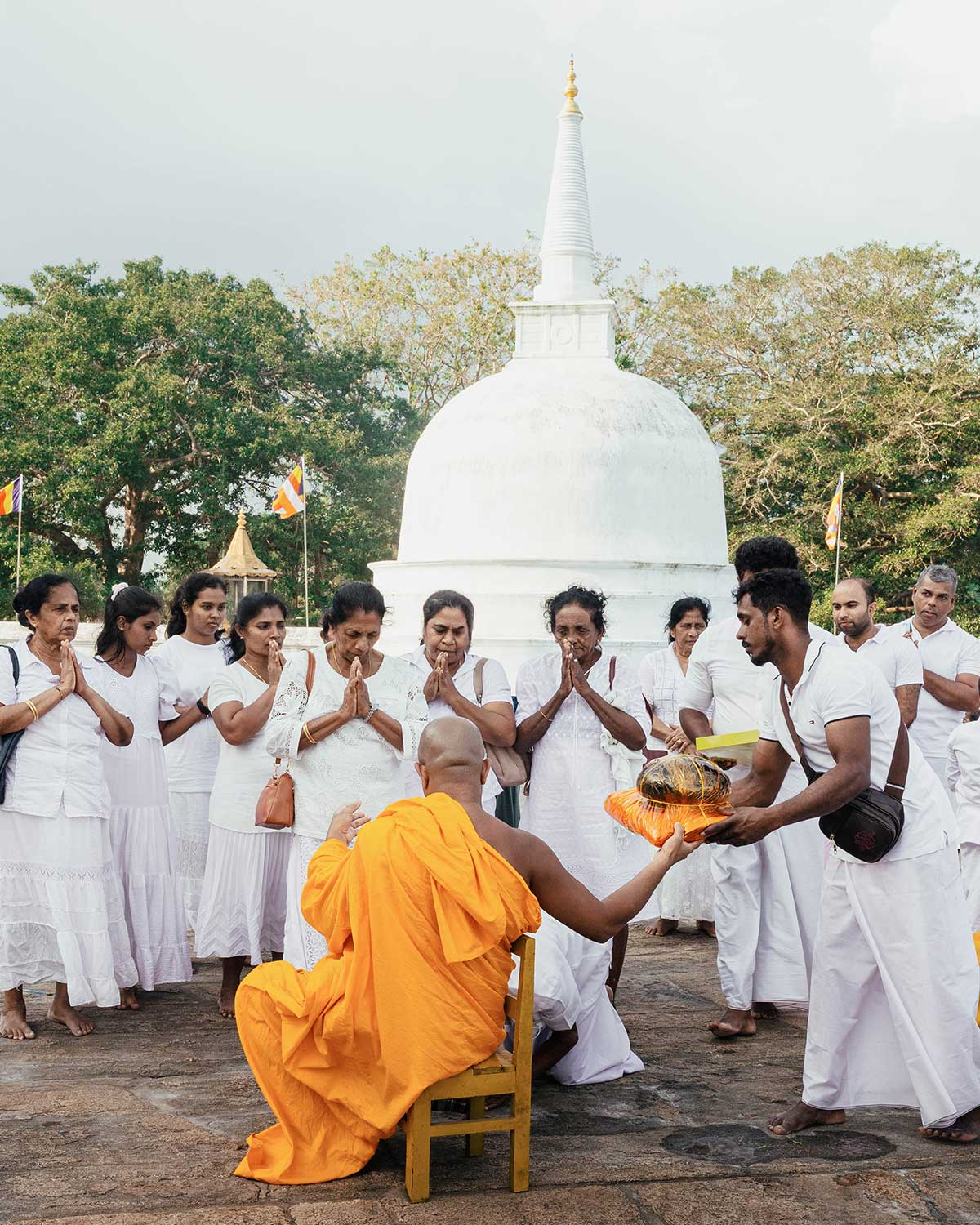
Vesak in Mihintale:  Mihintale, one of Sri Lanka’s most significant religious sites, lies 13kms east of Anuradhapura and is where Buddhism originated on the island. Mihintale can be an inspiring visit at all times of the year, especially on the full moon day of May when Vesak is celebrated in remembrance of Lord Buddha’s birth, enlightenment and Prinivanpama (his passing).  In June, the festival of Poson is celebrated here in remembrance of the introduction of Buddhism to Sri Lanka by Mahinda.  It is said that in 247 BC King Devanampiya Tissa of Anuradhapura, was deer hunting on the plains beneath Mihintale, and met Mahinda, son of the Indian Buddhist emperor, and chose the path of Buddhism for the Sinhalese nation following Mahinda’s persuasion. Thousands of pilgrims and devotees flock each year to Mihintale from across the country to pay homage.

Elephant Gathering
In August and September each year during the dry season, wild elephants make their way to the shores of the Minneriya Lake inside the Minneriya National Park in search of food and water.  Herds of elephants, sometimes numbering up to 300, converge upon the Lake – a thrilling sight not to be missed.
Activities
Cultural Triangle’s Architectural Legacy
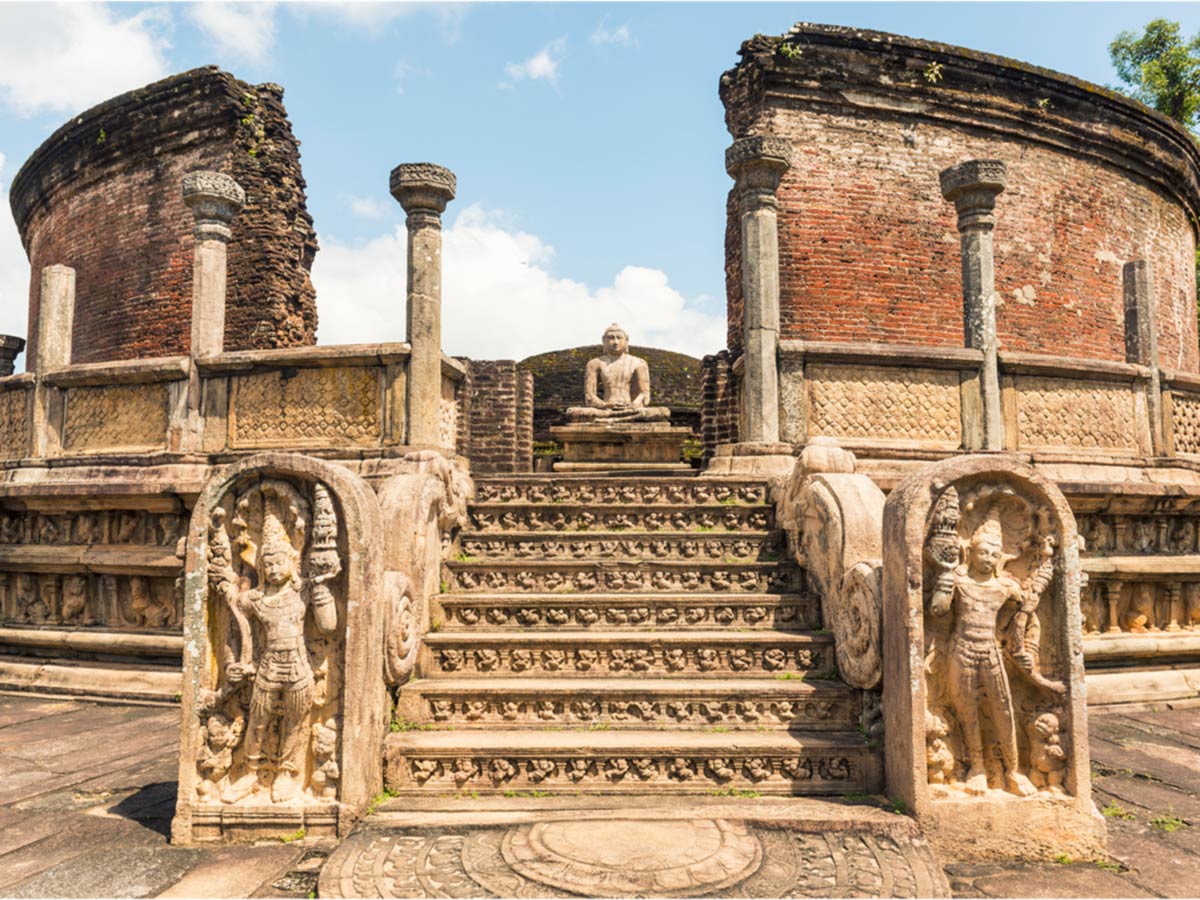
Although partly destroyed by invading forces, the ruins of the Cultural Triangle provides evidence of a sophisticated civilization which possessed advanced knowledge of science and technology, town planning and design, and valued the aesthetic beauty of the arts. The architectural legacy that remains today includes entire towns, palaces, temples, rock fortresses, monasteries, hospitals, ponds, and royal gardens. Hundreds of years later, the vast irrigation reservoirs built by the great kings remain a precious national resource feeding millions of hectares of farming land with water.
Rock Sculptures of Polonnaruwa
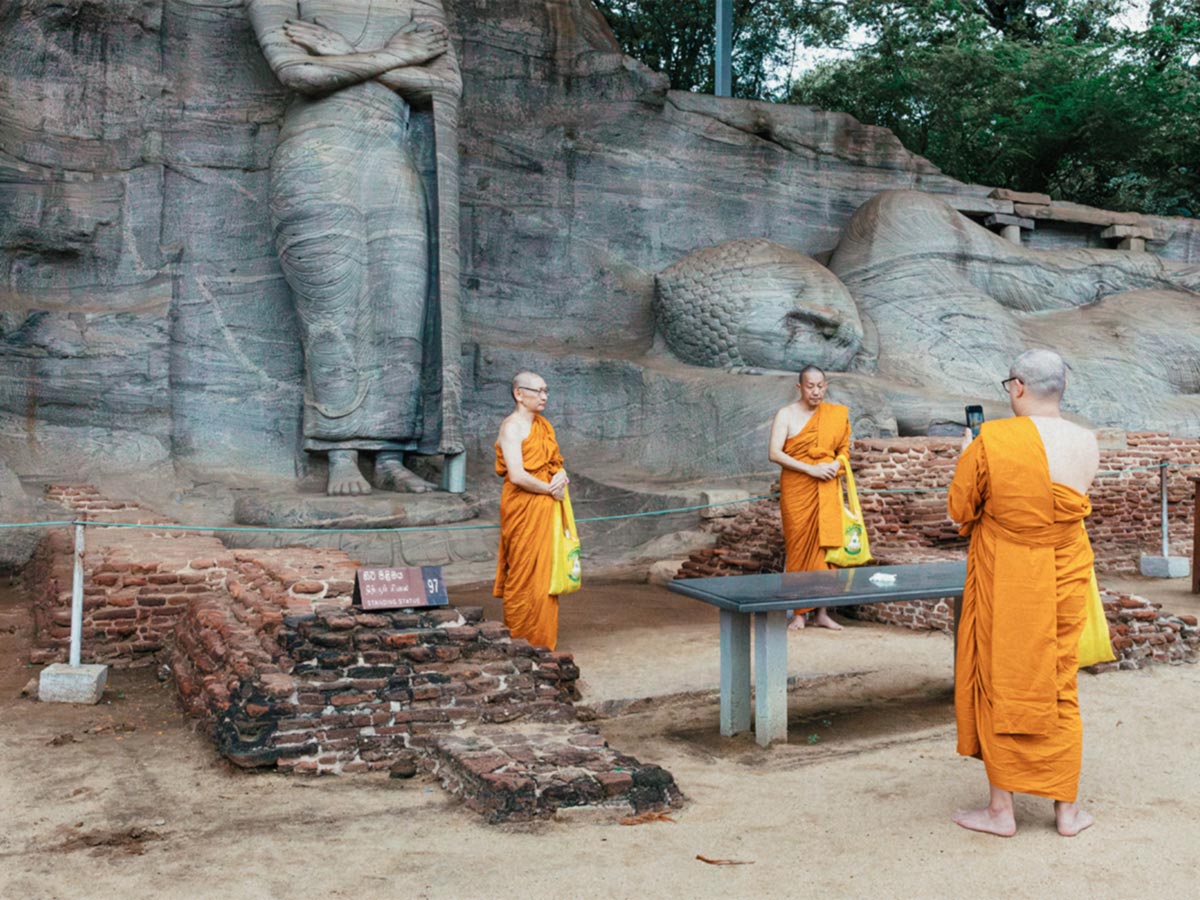
The ancient sculptures of Lord Buddha at the Gal Viahara cut into granite date back to the middle of the 12th century. The entire sculpture consists of four colossal statues of Buddha - a samadhi image in meditation posture, a seated Buddha image inside a cave, a standing Buddha image which is 23 ft in height, and recumbent Buddha image measuring 46 ft, depicting the passing away.
Buddha statues and paintings in Dambulla
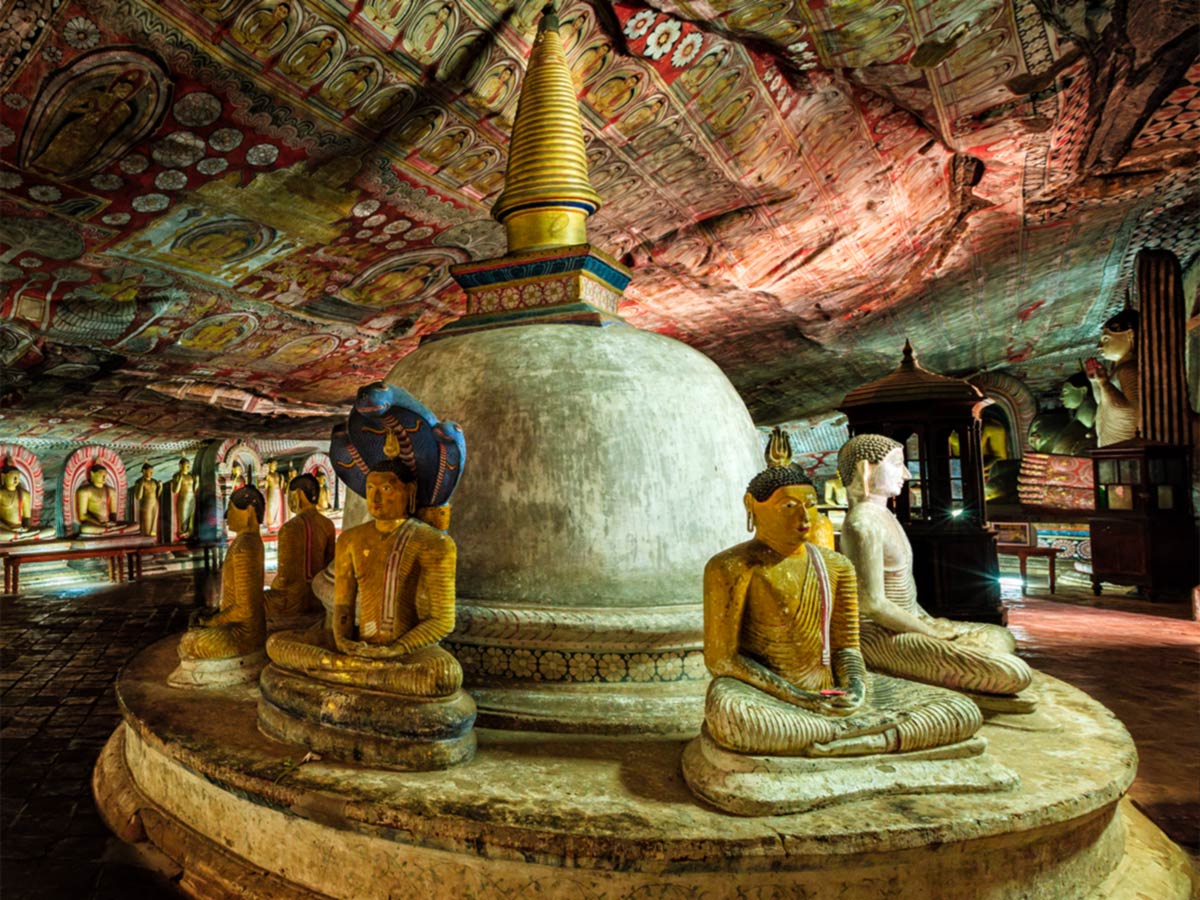
The cave temple consists of a complex of Buddhist image houses. Its rock ceiling is one large sweep of colourful frescoes, some of which date back more than 2,000 years, depicting Buddhist mythology, and the tales of the Buddha's previous births. This cave temple has the largest number of Buddha statues all housed in one place, including a 14m-long figure of the recumbent Buddha carved out of the rock.
Sigiriya Frescoes
Hidden in the caves of Sigiriya’s Rock Fortress is the Sigiriya frescoes – ancient paintings of maidens that date back to the 5th century. Although only a few remain today, research of ancient graffiti inscribed on the walls suggests that the entire western face of the Sigirya rock would have been covered with these frescoes. It is believed that some of the paintings may have been wiped out during subsequent years when the Sigirya was used as a Buddhist monastery.
Polonnaruwa Archeological Museum
Well worth visiting before you head out to see Polonnaruwa’s archeological sites. Located near the Rest House, this museum is thoughtfully laid out with interesting exhibits, and clear explanations giving an insight into the ancient kingdom of Polonnaruwa. The Museum takes you through a series of rooms, each dedicated to different aspects of the ancient city - the citadel, the outer city, the monastery area and the periphery, and the Hindu monuments. Small architectural models and photographs reconstruct how these places may have looked at the time. These scaled exhibits have been made possible with the assistance of the University of Moratuwa architecture department.
Sigiriya Rock Fortress
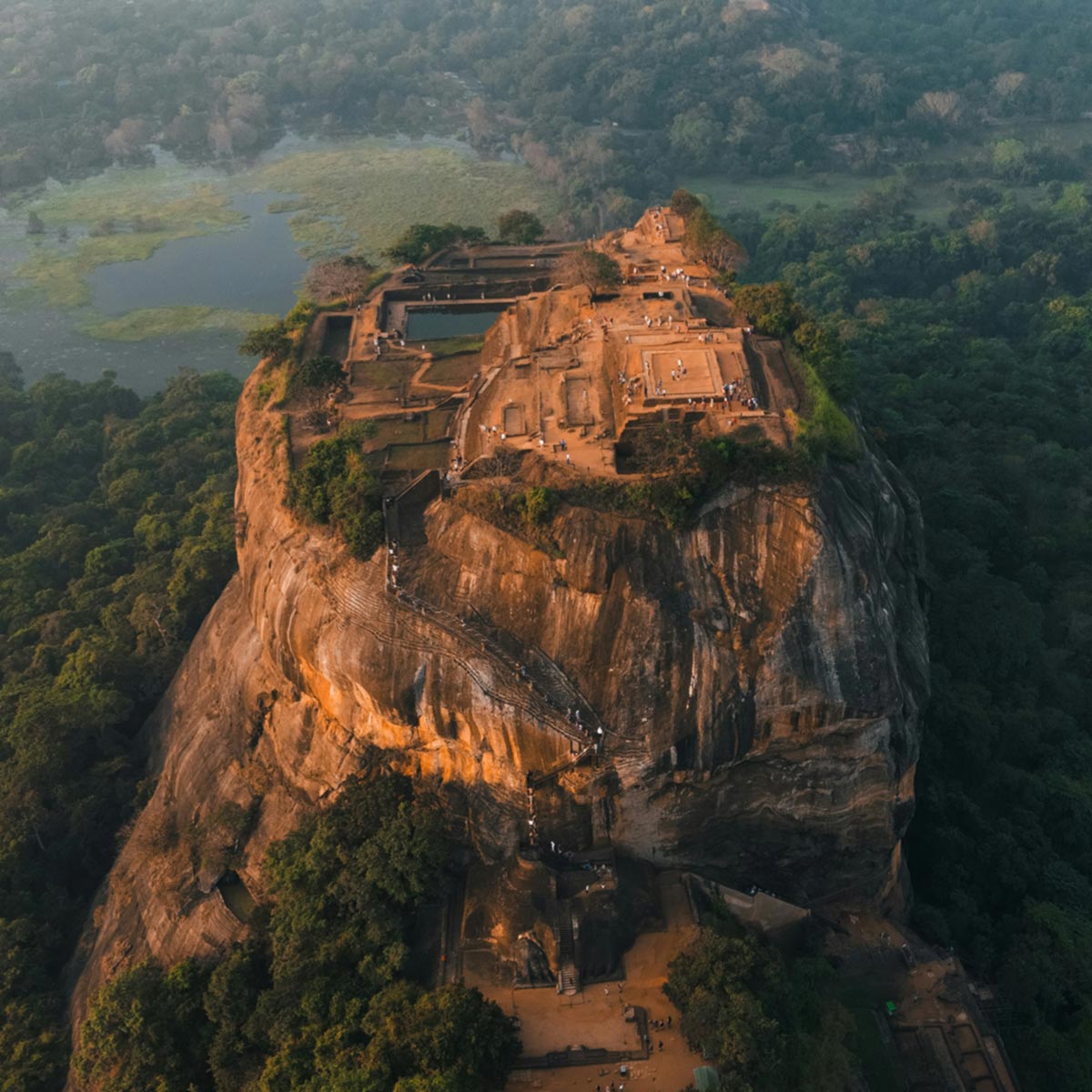
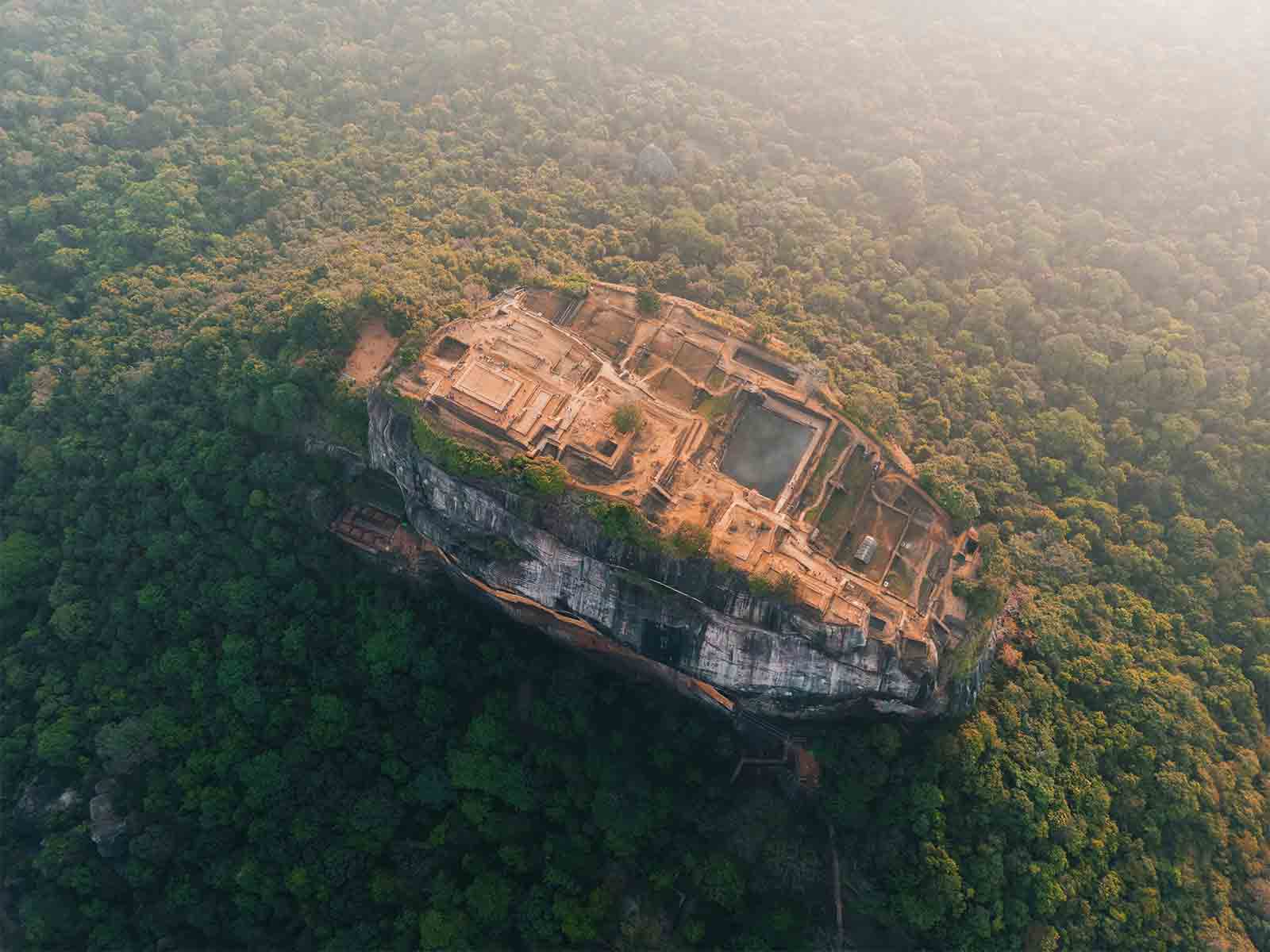
Sigiriya, a UNESCO World Heritage Site, is one of the most dramatic, inspiring and beautiful historical locations in the world. The climb to its summit on metal staircases attached to the rock face is one of Sri Lanka’s most loved experiences. Even those afraid of heights can find enough to marvel at from ground level. A mythical past of feuding dynasties suits Sigiriya’s striking setting. It was built in 5th century AD by king, Kasyapa, as a fortress-palace. Legend says that King Kasyapa murdered his father, Dhatusena, and claimed the thrown for himself. However, Kasyapa was not the direct heir (his mother was one of Dhatusena’s concubines) and he feared that his half-brother, Prince Moggallana, would return from exile in India and rightfully claim his crown. Moggallana did return to find Sigiriya in its full-glory and Kasyapa’s army waiting for him. Despite building an impenetrable stronghold, Kasyapa was defeated. Abandoned by his army, Kasyapa killed himself and left his half-brother to reign from his castle paradise. Worthy of being called the “8th wonder of the world”, Sigiriya will astonish anyone with its outstanding views across the plains, staggering engineering and wonderful atmosphere.
Polonnuruwa
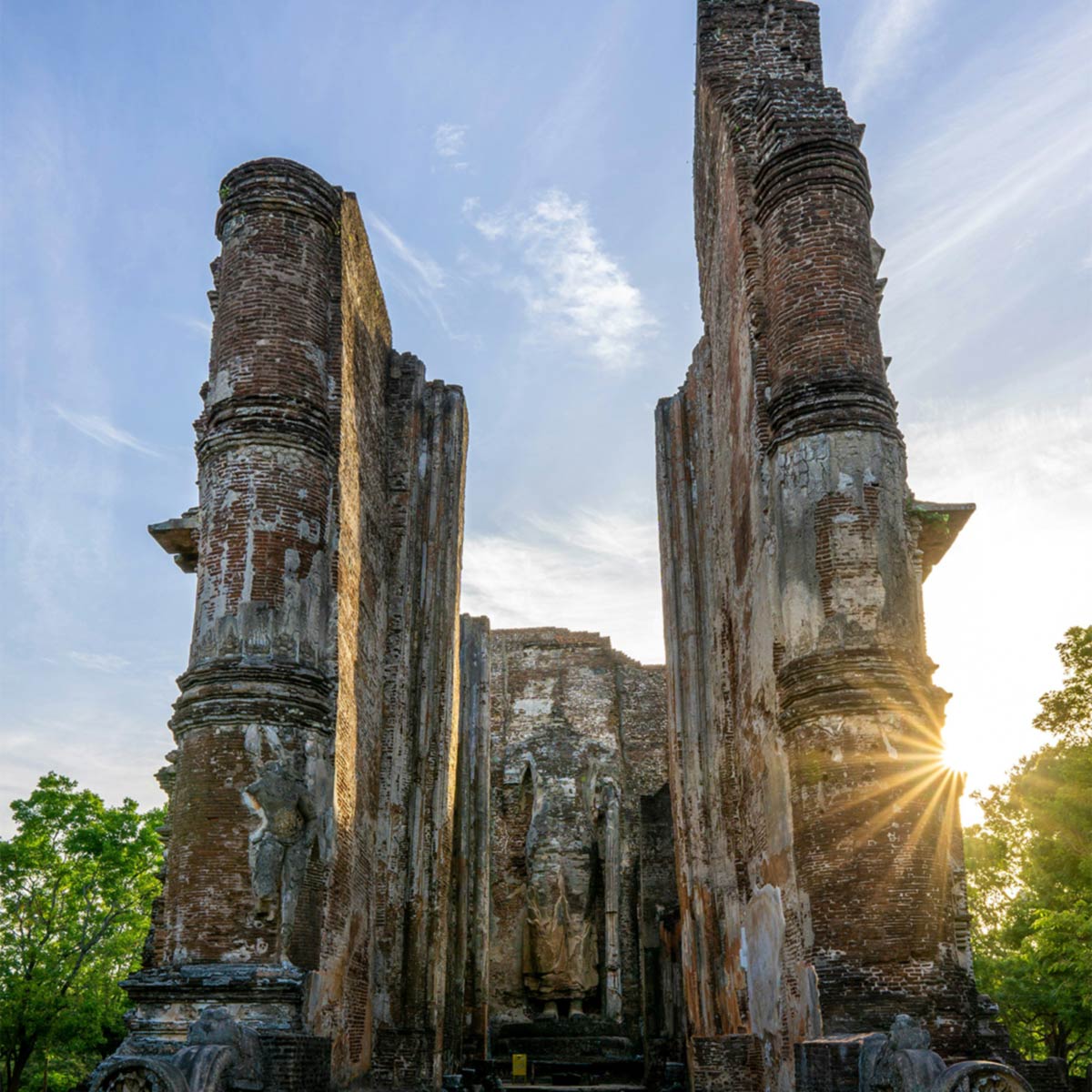
Sri Lanka’s royal medieval capital in 1073, for nearly a century Polonnaruwa had been a military base for invading Chola tribes, from southern India, until they were overthrown by the Sinhalese king, Vijayabahu I in 1070. The next king, Parakramabahu I, was the main driving force behind the development of Polonnuruwa. It remained Sri Lanka’s capital until the late 13th century, but became increasingly susceptible to Chola invasions and it became lost to the jungle once more as the capital drifted south-west. Today, the ancient city’s ruins remain in remarkably good nick, and are a fascinating site to visit. The most impressive are the ancient sculptures of Lord Buddha at the Gal Viahara cut into Granite stone dating back to the middle of the 12th century. The entire sculpture consists of four colossal statues of Buddha - a samadhi image in meditation posture, a seated Buddha image inside a cave, a standing Buddha image which is 23 ft in height, and recumbent Buddha image measuring 46 ft, depicting the passing away.
Anuradhapura
Sri Lanka’s first capital, Anuradhapura, was the greatest monastic city of the ancient world. It was royal capital for more than 100 Sri Lankan kings and at its heights was home to thousands of monks from dozens of monasteries. Originally founded by a minister called Anuradha, in the 4th century BC, it became the capital of Sri Lanka two centuries later. After a long and sometimes bloody history, it was abandoned in 1073 and is now today the most important religious and cultural site in Sri Lanka. The ruins of Mahavihara, the first monastery, built by King Devanam Piyatissa in 250 B.C.E, and several other monasteries and temples can be seen. Also don’t miss the ancient Bo Tree, which was originally a branch of the Bo tree in Budda Gaya under which Lord Buddha attained enlightenment and brought to Sri Lanka by Emperor Asoka’s daughter, Princess Sangamiita.
Dambulla Cave Temple
The caves at first came into use as a refuge for King Valagambahu in 1st century BC. Concealed by the local monks, upon returning from exile to his throne at Anuradhapura, he had the magnificent cave temple built for them. The cave temple consists of a complex of Buddhist image houses. Its rock ceiling is one large sweep of colorful frescoes, some of which dates back to over 2,000 years, which depicts Buddhist mythology, and the tales of the Buddha's previous births. This cave temple has the largest number of Buddha statues all housed in one place, including a 14m-long figure of the recumbent Buddha carved out of the rock.
Mihintale
One of Sri Lanka’s most significant religious sites, Mihintale lies 13kms east of Anuradhapura and is where Buddhism originated on the island. In 247 BC King Devanampiya Tissa of Anuradhapura, was deer hunting on the plains beneath Mihintale, and met Mahinda, son of the Indian Buddhist emperor, and chose the path of Buddhism for the Sinhalese nation following Mahinda’s persuasion.
Aukana
One of Sri Lanka’s most perfect and elegant statues, the Aukana Buddha lies to the west of the large Kala Wewa tank. Creation of both the temple and the tank (reservoir) is attributed to King Dhatusena in the 5th century. The statue stands 12m high, carved from a single rock and is completely free-standing. It is an example of the Abhayamudra Buddha, showing superhuman qualities. The right handed gesture, raised to the right shoulder with the palm spread, signifies lack of fear. The left hand’s position draws the worshipper to Buddha for release from their earthly bonds. The statue has gained significance in recent times due to the destruction of similar Buddha in Afganistan. The Aukana Buddha can be visited en route to Anaradhapura and can easily be combined with the ancient monastery site of Sasseruwa. It only takes a maximum of 45 minutes to visit the site. The nearby Kala Wewa tank (reservoir) is also an excellent place to stop off and have a picnic.
Yapahuwa
The rock fortress of Yapahuwa is off the beaten track, but it is worth a visit. Although not as significant as other Cultural Triangle sites it does have a special individual charm. After the fall of the great city of Polonnuruwa, the Kandyan kings fled to a succession of inaccessible crags, bearing with them the sacred tooth relic of the Buddha. One of them was Yapahuwa, a little way off the Kurunegala-Anuradhapura road, and one of the great architectural sites of the island. This early 13th century stronghold is reminiscent of Sigiriya, a massive granite outcrop, set in a shady location, and rising 100m above the plains below. King Bhuvanekabahu I developed Yapahuwa, building a palace and a temple, which housed the famous tooth relic for 11 years. After Yapahuwa was abandoned, Buddhist monks took it over and still remain today.
Ritigala
This cultural site will delight nature lovers who want to escape the main tourist haunts. The Ritigala Buddhist Monastery nestles deep inside the Ritigala Strict Nature Reserve, found just off the Anuradhapura-Habarana road, and is the partially excavated ruins of an extensive Buddhist Monastery. It was abandoned following invasions in 10th and 11th centuries and today holds special appeal with its curious blend of nano-safari and archaeology. Walking up wooded slopes, and almost stumbling across the beautiful ruins does give you a feeling of adventures in search of mythical pasts; it is easy to imagine yourself as Indiana Jones whilst clambering over the overgrown relics of a forgotten time. A great way to spend an hour or two.
Aluvihara Cave Temples
Located 26 km. from Kandy in Matale is the ancient Aluvihara cave temple, which is of great significance in the history of Buddhism. It was here that the oral teachings of the Buddha - the Tripitaka - were committed to writing for the first time in 3rd century AD. The language of these Buddhist scriptures, Pali, influenced the development of the Sinhala langugage. The Aluvihara temple consists of large caves with Buddha images and frescoes. Further in is a cave dedicated to a Buddhist monk.
Jungle village of the Veddas
Sri Lanka’s indigenous inhabitants, the Veddas or Wanniya-laeto (forest dwellers), preserve a direct line of descent from the islands’ original Neolithic community dating from at least 16,000 BC. The Veddas have repeatedly been forced to choose between assimilating into the surrounding mainstream cultures or to retreat into a shrinking forest habitat. The few remaining Vedda communities are determined that their way of life will continue into future generations and still retain much of their own distinctive cultural identity, indigenous language, a traditional lifestyle and occupations including hunting, honey gathering, and chena cultivation. A visit to Dambana will give an opportunity for visitors to meet and interact with this community of indigenous people and learn about their lifestyle.
Naagala Kanda Aranya
There is no scarcity of ancient temples in Polonnaruwa. But Naagala is not just off the tourist track, it is even off the popular pilgrim route. The ruins of the ancient monastic complex lie silently among the trees. As silently as the monks and lay meditators of the functioning forest monastery within the same site. Silence is very obviously treasured, as there is a notice issued to ‘youth unaccompanied by family members’ on the acceptable code of conduct. The origin of the site is attributed to Mahasen, the 3rd century AD king who is revered as the builder of Minneriya Tank and many others. The ancient steps that lead you up from the ‘office’ by the pond have been cut so gently that they could be ripples on the rock surface. Of the statues, only one standing Buddha remains. The stone folds of the robe are so detailed that the double fall at the back is clearly visible. A strenuous climb through the forest will bring you to the peak from which the full range of Rajarata, its tanks and habitations, can be viewed.
Nalandaa Gedige
This is a curious site found halfway between Dambulla and Matale. Built in the 8th century, Nalanda Gedige, uniquely, blends the architecture of Hindu temples in south India and the more traditional Sri Lankan Buddhist architecture. It also has a number of stone carvings of the Karma Sutra, which can only just be made out due to centuries of weathering. Nalanda Gedige is visited very little, despite being on the Cultural Triangle round ticket, which is surprising as it stands next to a beautiful reservoir and is a very atmospheric spot.
Jungle safari in Minneriya
Fore those wanting to sweeten their cultural visits with a spot of safari, the Minneriya National Park is conveniently located. It is a small park, barely 90 sq kms, but its lake attracts herds of elephants. A jeep safari early morning or at dusk is best advised.
Elephant safari in Habarana
Set amidst natural wilderness and serene lakes, Habarana is situated in close proximity to the Minneriya National Park famous for its large herds of elephants. Those wanting a closer encounter with an elephant, a jungle trek on elephant back is an adventurous experience. Accompanied by the mahout – the elephant handler - you set off for a ride of a lifetime along jungle paths and across shallow rivers. Beware the poorer quality elephant treks put on for unsuspecting tourists.
Cycling in Polonnaruwa
Polonnaruwa’s ruins are ideal for exploring by bicycle and they can be hired in the nearby town. The best bikes on offer are all-terrain mountain bikes that have been serviced regularly, although quality varies. Paths are good, but should you be unfortunate enough to get a puncture or other problems, there is allegedly a mechanic on bicycle on hand who can assist with repairs.
Rangiri Dambulla International Cricket Stadium
This stadium was built in only 167 days at the start of the century in order to provide Sri Lanka with a venue that was dry all-year round. England were skittled for 88 in the inaugural match for 88 in 2003. The view over Dambulla lake makes up for somewhat limited facilities. The ground also does not serve alcohol, owing to the ownership of the land by Buddhist monks.
Angsana Spa
The Deer Park Hotel, now managed by Angsana Resorts & Spas, stands in the heart of the cultural triangle overlooking the ancient Giritale reservoir. The Angsana Spa at the Deer Park hotel has five outdoor and four indoor spa pavilions and offers an extensive range of massage, body and beauty treatments, an Angsana Gallery which is a lifestyle boutique shop with an array of home spa accessories, fashion apparels and handicrafts.
Six Senses Spa
The Six Senses Spa at Heritance Kandalama, with an extensive menu of spa treatments, is located on the top floor of the hotel. This is the ultimate form of relaxation with treatment rooms all overlooking the breathtaking surroundings of Kandalama. The Six Senses Spa, with extensive spa experience within the Asian region, provides rejuvenating therapies incorporating the traditional Ayurveda and aromatherapy spa treatments.
Vil Uyana’s Island Spa
The Island Spa & Wellness Center consists of a fully equipped a/c gym, a yoga pavilion, and a wellness center headed by an Ayurvedic physician. Aromatherapy and Ayurveda herbal oils are used for the wide array of relaxing massages, wraps and body works that are on offer. The therapy rooms, surrounded by water and open to the natural surroundings, are ideal for relaxation. Here, the sounds of nature combined with the gentle hands of the therapists will lull you to sleep.
Spa at Elephant Corridor
The Ayurvedic and Wellness Spa, at Elephant Corridor is Situated in a tranquil setting amidst tropical wilderness. The spa menu includes several Ayurveda and aromatherapy relaxation therapies using herbal oils.
Ulpotha
This Yoga-focused eco-retreat, and one of Sri Lanka's greatest secrets, is hidden away in near Embogama close to Anuradhapura. Ulpotha is a place of total peace and tranquillity where one lives among trees, sunflowers, marigolds and vegetable patches, in simply furnished wattle-and-daub houses with roofs thatched with woven coconut palm leaves. Yoga classes are conducted in an open-sided building with a leaf-thatched roof or in the cool shade of a Banyan tree. There are 13 fortnightly Yoga courses planned each year. Ulpotha also conducts relaxing and curative Ayurvedic treatments supervised by the in-house Ayurvedic physician. Ulpotha is only open from June and August and from November to March.
Minneriya National Park
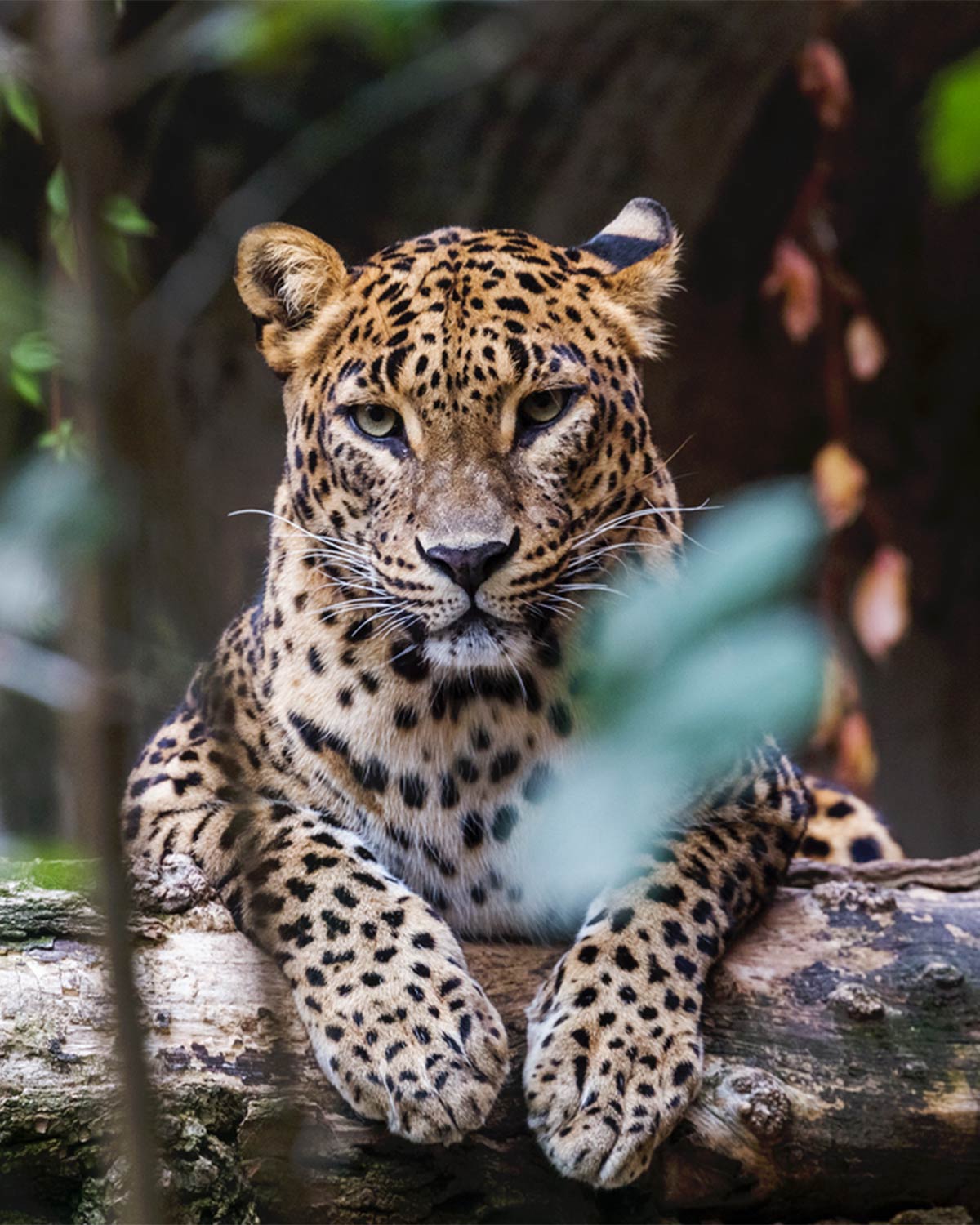
Sitting in the centre of the cultural triangle, Minneriya is a good alternative to the busier parks in the south and it's easy to weave in a day here between visiting the ancient cities. The dry season, preferably from June to September, is the best time to visit the park when the ancient tank, the lake that dominates the area, dries out and the grasses and shoots push through. During this time it is possible to see herds of up to 150 elephants feeding and washing, as well as toque macaques, sambar deer and leopards. The hungry bird flocks include cormorants and painted storks. Minneriya, closest by car to the ancient city Polonnaruwa, was upgraded from a Nature Reserve to a National Park because of the increased number of tourists coming to see the elephants. A game drive in the park comes complete with English speaking guide and a driver.
Wasgomuva National Park
This National Park, east of Minneriya, consists of riverine and dry evergreen forests, grasslands and wetlands. Wasgomuwa is endowed with a number of canals and waterways springing up from the 470 metre high Sudu Kande (hill) near by. Famous for the elephants frequenting the Mahaweli River, which runs along one of the boundaries of the park, Wasgomuwa is also home to numerous other animals including sloth bear, sambur, spotted and barking deer, wild boar, the purple-faced leaf monkey, and 143 species of bird. Archeological ruins of ancient settlements dating back to the period of Sinhala kings can be seen within this national park. Wasgomuwa can be accessed from the districts of Matale or Polonnaruwa.
Quick Finders
Use the quick finders below for complete listings of your choice
Countries
Sri Lanka Hotels
Sri Lanka Villas & Bungalows
Sri Lanka Tours
Sri Lanka Interactive
E-Brochure

Download our monthly
e-brochure.

Click here to download
Newsletter

Subscribe now to receive our quarterly e-newsletters and also special offer e-updates. Just enter your email address.
 
Red Dot's Sri Lanka holidays and Sri Lanka tours are ATOL protected by the Civil Aviation Authority as long as you buy Sri Lanka flights from us. For full protection on your holiday to Sri Lanka, book your Sri Lanka flights with Red Dot, as well as your Sri Lanka accommodation. Red Dot has the largest selection of Sri Lanka hotels, villas and guest houses at competitive prices and offers independent advice and flexible itineraries. Trust Red Dot for your holiday needs in Sri Lanka, South India and the Maldives. ATOL protection extends primarily to customers who book and pay for their Sri Lanka tours or Sri Lanka hotels in the United Kingdom. [ Check our licence ]
© 2009 Red Dot Tours. All Rights Reserved. Terms & Conditions of Use | Disclaimer