Learn more
- Destinations
- About Us
-
Inspiration
Why We love The Hornbill Festival in Nagaland
 Share
ShareWhy We Love The Hornbill Festival in Nagaland
Not many people could pinpoint Nagaland on the map. It remains a refreshingly authentic, un-Westernised Indian state that seems to have stayed clear of the well-trodden tourist routes and, as a result, remained true to its deeply tribal roots. Sitting in the far reaches of northeast India, spread across the foothills of the Himalayas and bordering Myanmar, it’s a land of vast verdant valleys, precipitous thatched farmhouses and rich indigenous culture.
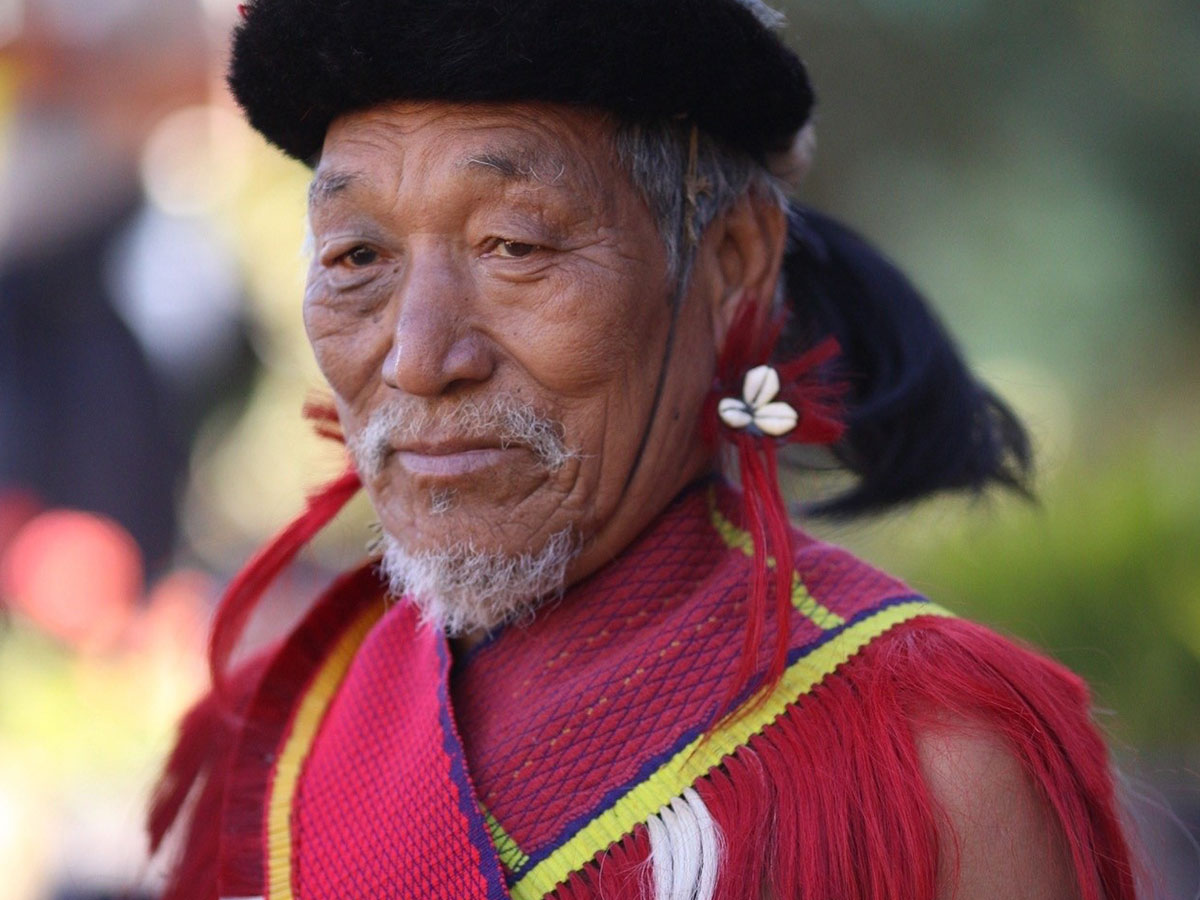
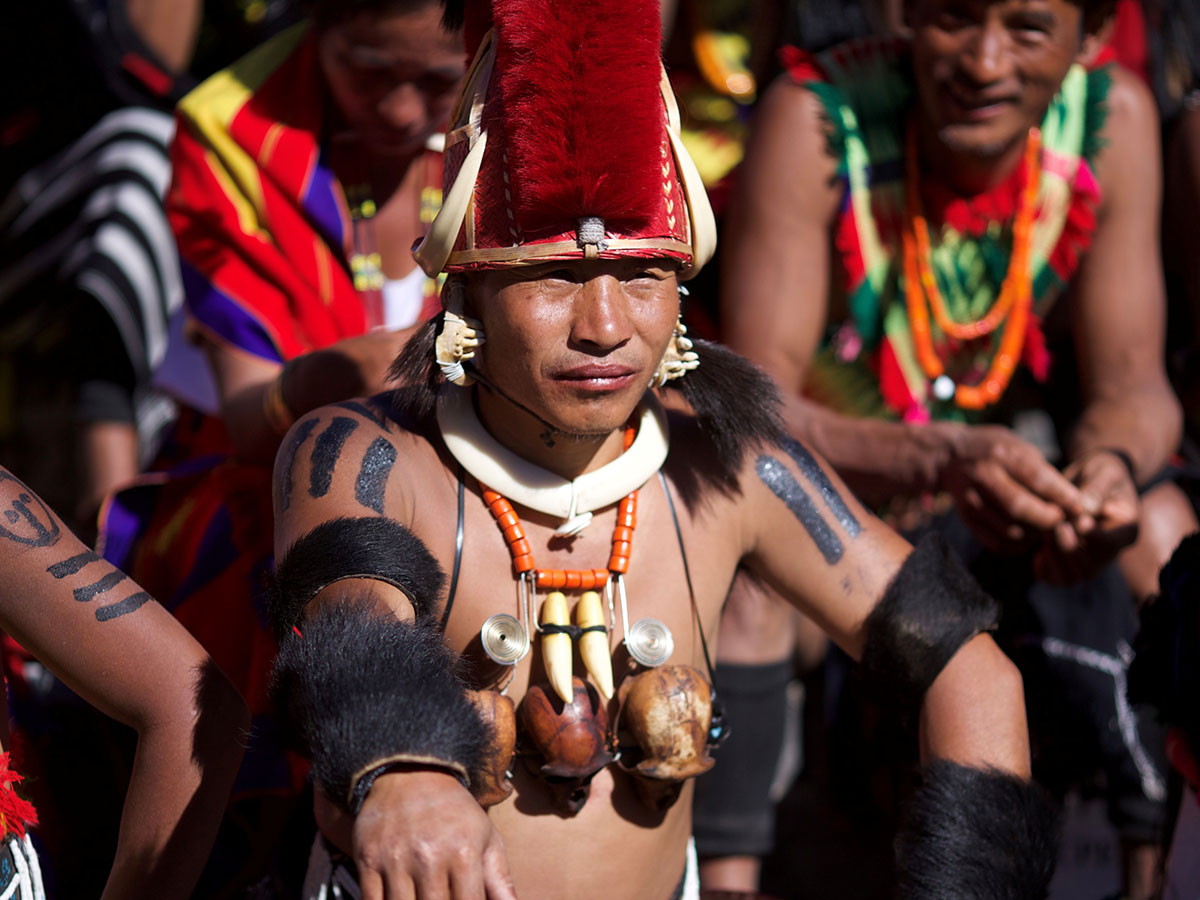
Nagaland’s people divide themselves between 16 major Naga tribes, each with their own distinctive customs, dress and dialect. Tribal folklore, storytelling and identity are intrinsic parts of identity here, with huge importance given to the upholding of age-old customs. Every year in December, the capital city of Kohima becomes the focal point of this colour and custom, hosting the Hornbill Festival, where tribes gather together in vibrant dress to share their tribal narrative through traditional performances of warrior dancing, chanting, challenges and storytelling.
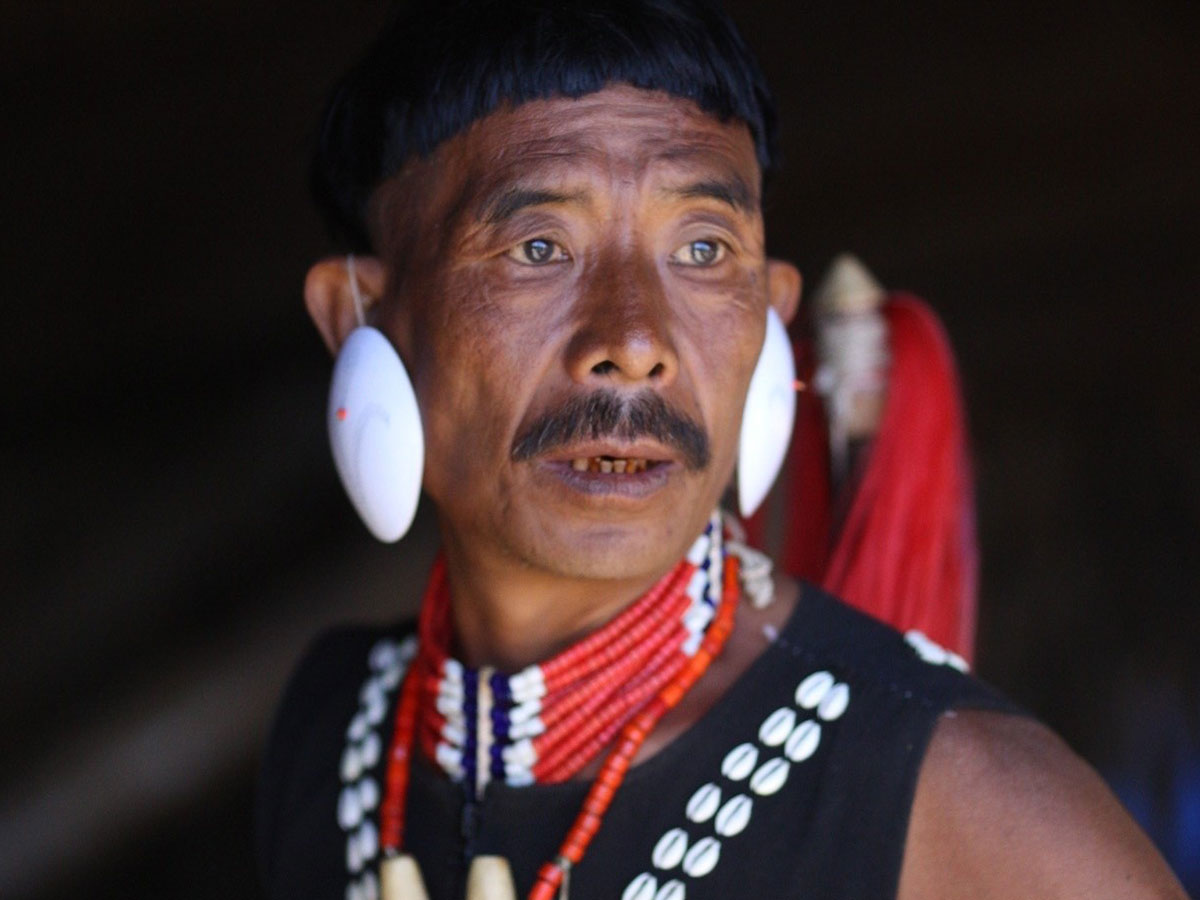
It’s a deeply sensorial experience. The air fills with the scent of wood-burning fires and traditional Naga food while a cacophony of flutes, chants and whistles accompanies the overlapping rhythmic beats of hundreds of log drums. Costumes shimmer in the bright sunlight as kaleidoscopic woven cloths, garlands of beads, vast spears, headdresses and endless feathers catch your eye, singing with richly patterned designs and the distinctive repetition of motifs. And that’s before the actual performances begin.
This guide will introduce you to this immersive cultural festival, which will give you an unforgettable glimpse into the living traditions of this intriguing state. We’ll share some explanatory insights into the event itself, the food that you ought to experience while you’re in Nagaland and an idea of how to best explore the region once the festival is over.
Sights, Sounds and Traditions: The Must-See Experiences
The Hornbill Festival takes place on the outskirts of Kohima, in a small heritage village called Kisama. The village is made up of thatched meeting houses (known as morungs) encircling a vast showground. During the Hornbill Festival, every morung acts as the central meeting point for a specific tribe. This gathering of all the tribes from across Nagaland is what lies at the heart of the festival. It’s a display of unity and difference. An authentic sharing and strengthening of the rituals, craftsmanship and ancestral knowledge that shape and define each of these remote Himalayan communities.
For tribal members, it’s a chance to perform, celebrate and share their skills. Each tribe takes their turn in the spotlight, entering the showground to sing, dance, re-enact warrior battle displays or even perform mini dramatic depictions of day-to-day life within their tribe.
You’ll see folk dances performed by warriors in full ceremonial dress, ranging from the chang lo victory dance of feathered headdresses and pounding spears to the vibrant costumes and rhythmic beats of the kuki dance. Music plays a major role, from the zeliang tribal music of bamboo flutes, mkhum mouth harps and vast log drums to warrior songs called li, which were once the celebration song of headhunters, or heka storytelling chants, sung over the melodic bamboo flute, which recount stories of love, legend and harvest.
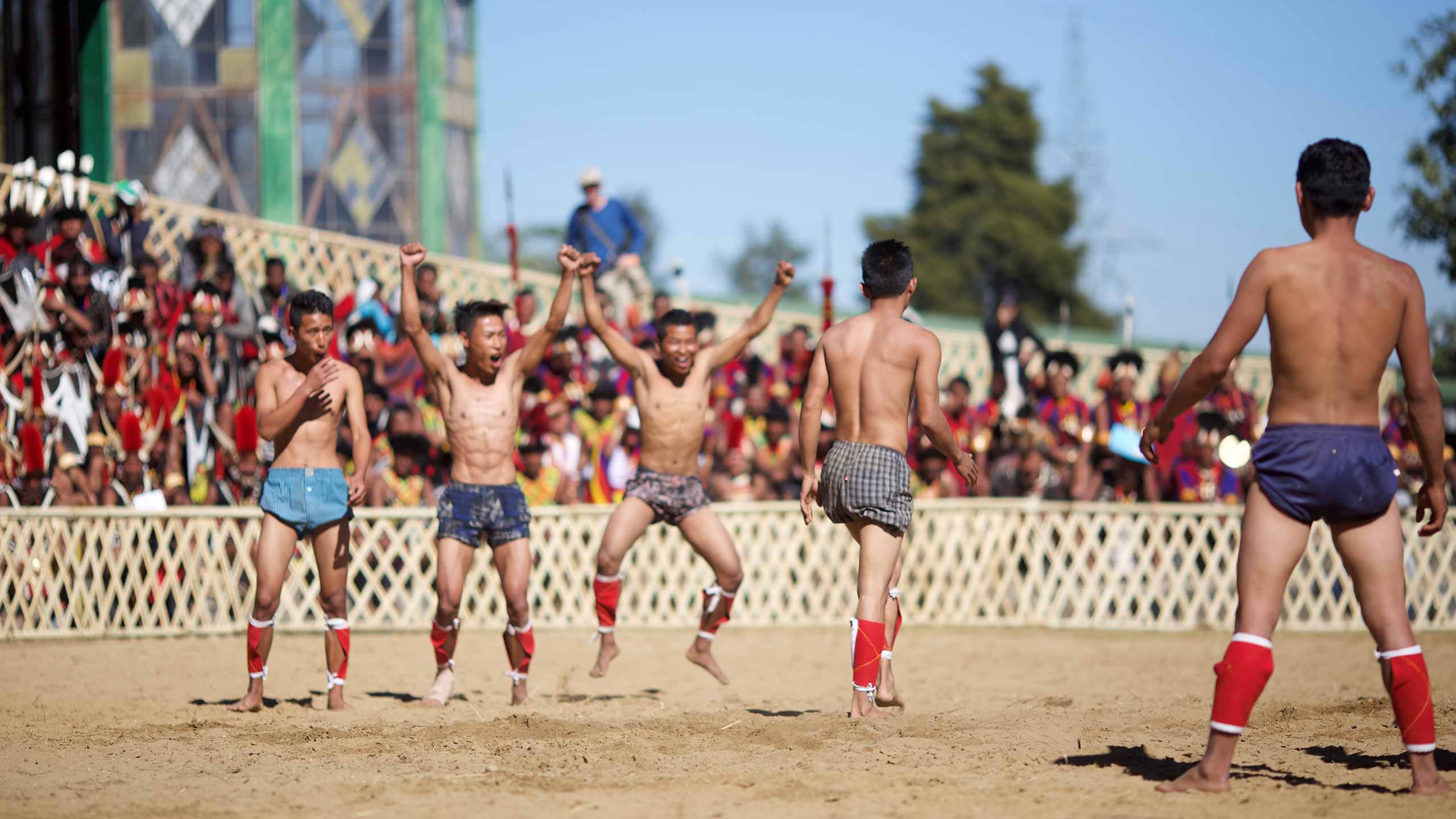
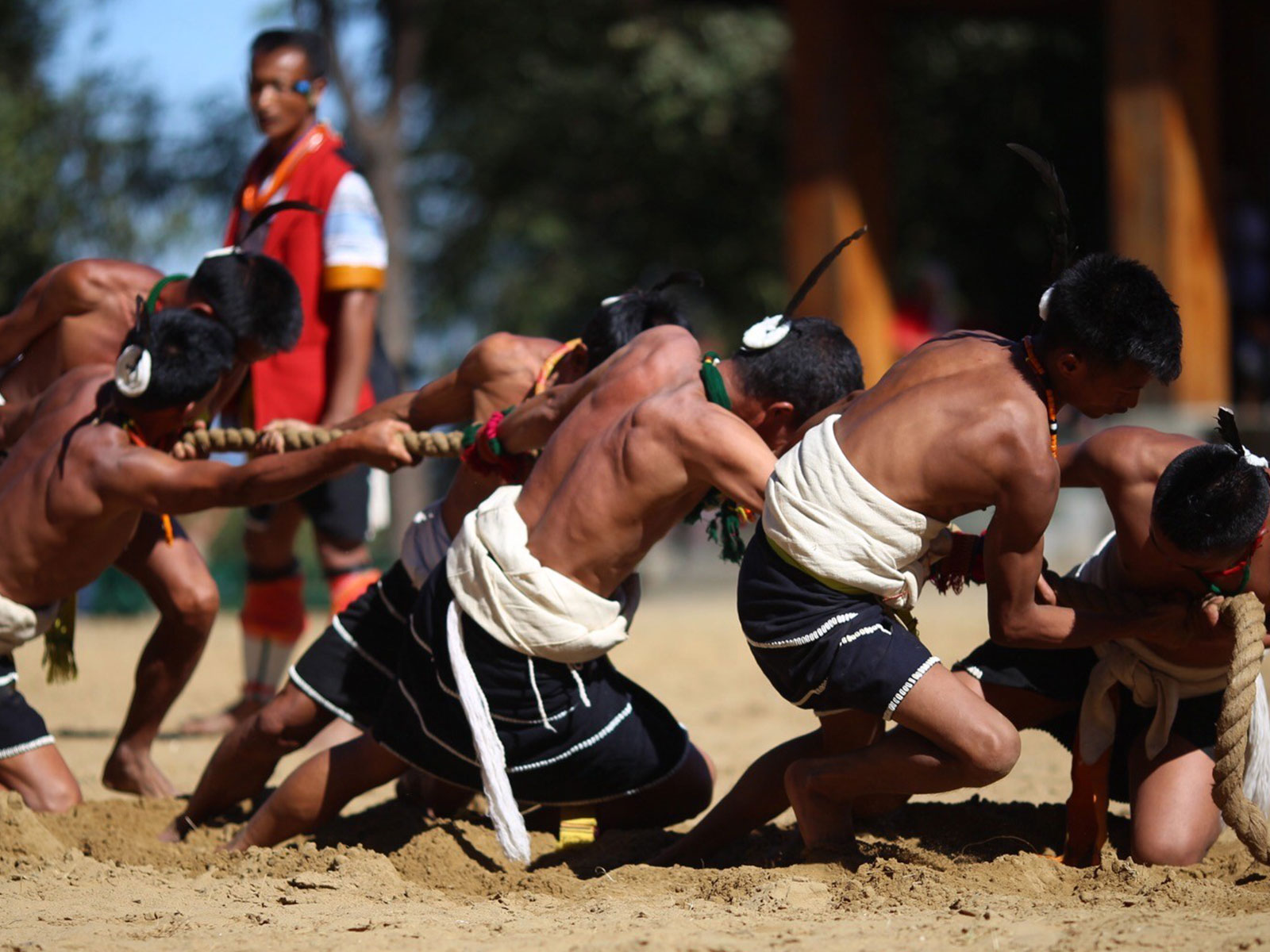
Games and competitions between tribes play a huge role, alongside the national sports of archery, stone-pulling and wrestling, you’ll find young tribesmen competing to climb greased bamboo poles and stone-throwing contests targeted at sticks in the ground.
Within each of the morungs, vast spreads of food, displays of craftsmanship and storytelling sessions around open fires underpin the physical prowess of the showground with a deep cultural resonance. Artisanal markets pop up outside each morung, and you’ll have the chance to purchase keepsakes of iconic tribal handiworks, including vibrant Naga shawls, each with a tribe-specific pattern or motif, bamboo and cane artefacts, richly coloured beaded jewellery or wooden carvings and spears.
The sense of community togetherness and pride is captivating as each tribe shares its distinct narrative and welcomes visitors with open arms. It is a true privilege to be a guest at this festival where a rare window is opened into an ancient and continued way of life.
Why the Hornbill Festival Stands Out in India
India is a country of festivals, where colour, music and dance are used to celebrate the spiritual and the significant. Yet, even among this cultural brightness, the Hornbill Festival stands out as remarkable. It’s known across India as “the festival of festivals”, a truly mesmerising display of cultural heritage, continuation and power.
For us, the key factor is that despite its growing prominence on tourist calendars, the festival never feels contrived or commercial. It remains utterly authentic and focused inwards on the continuation of a resilient and powerful community. The main aim of the festival is not touristic entertainment, although they are happy to see you enjoying the show, but a deep expression of identity and a guarantee of collective memory, ensuring the ongoing stability of these tribal identities for the next generation.
A Taste of Nagaland: Flavours That Define Naga Food
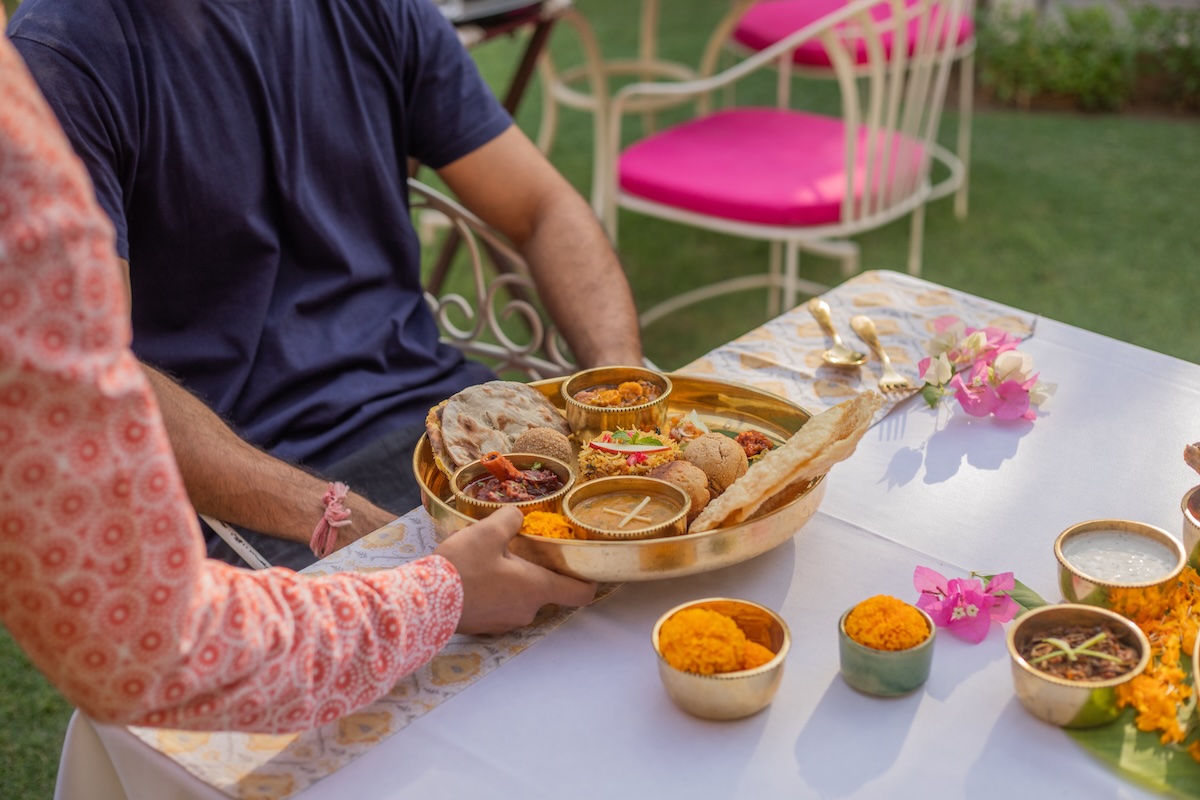
Food plays a deep role in the cultural framing of each of the Naga tribes but, for visitors to this area, it’s usually hard to explore gastronomically. Naga culture is less about eating out and more about meals built around the family home, so eating at the festival offers the perfect opportunity to explore the unique tastes here.
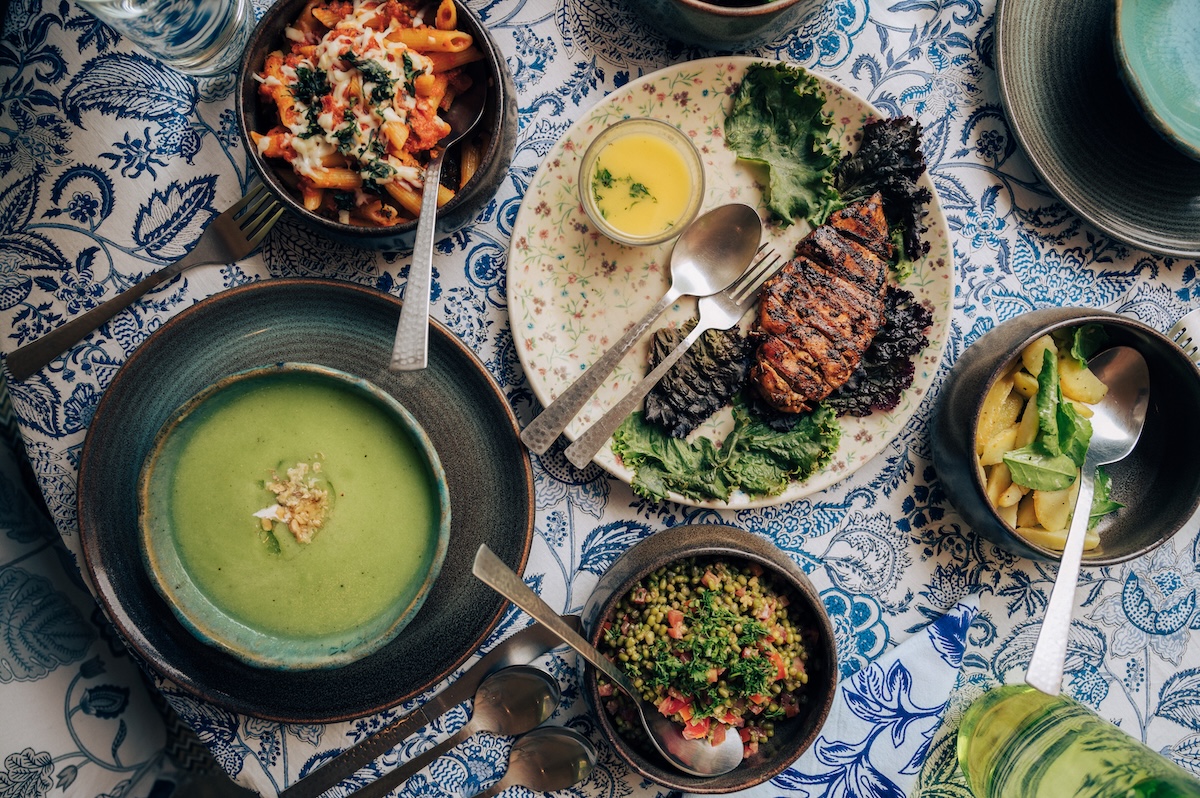
As a rule, Naga food is bold, fiery and smoked, based on a strong relationship with the land. Farmed far away from chemical interference or foraged from untouched forests, it is predominantly organic and features a core of soya beans, fermented bamboo shoots, ginger and red rice with hints of wild mountain herbs. It is well-known for its raja mircha, one of the world’s hottest chillies, predominantly used in chutneys to accompany meals.
A wide variety of meats are traditionally smoked over the family’s wood-burning hearth, including chicken, pork, fish and wild game such as deer, boar and bison. This smoky heart of the meal and the home is the taste most associated with the region. We recommend trying akibiI, a smoked pork with bamboo shoots that is a signature delicacy here, often served with a galho rice of vegetables and meat. Fermented soya bean known as axone also forms a staple in many Naga households, used to make chutneys, stews and curries.
Alongside the food, you’ll no doubt be offered some traditional rice beer, called zutho, which is often served in bamboo mugs and makes the perfect accompaniment to the rich flavours on offer.
Beyond the Festival: Exploring the Beauty of Northeast India
When the festival ends, you’ll probably find yourself wanting to venture further into Nagaland, giving you the chance to explore more deeply and peacefully among the rolling hills and into the enticing culture.
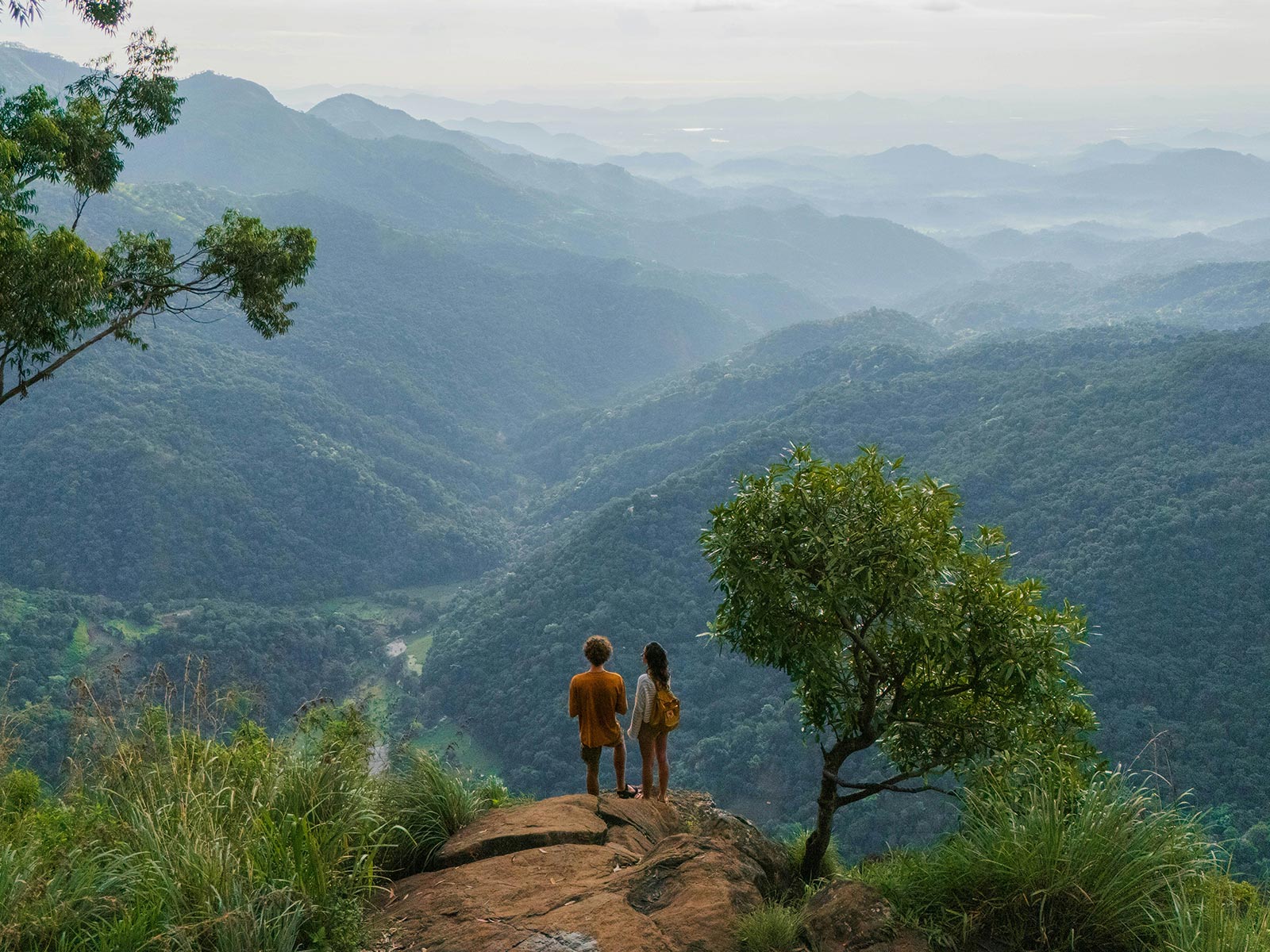
Dzukou Valley is a wonderful place to start, with miles of trekking routes up into the surorunding foothhills, pristine streams crisscrossing the patchworked fields and meadows of rare seasonal flowers, earning it the nickname “the valley of flowers”.
Longwa Village sits directly on the India – Myanmay border and is the little-changed ancestral home of the fearsome Konyak tribe known for their practice of headhunting. A visit here gives you the opportunity to meet with the last remaining headhunters of the tribe alongside village elders, speaking to them about their cultural heritage while they share their stories of this now extinct practice. It’s also a wonderful base for treks out into Myanmar.
Khonoma is the home of the Angami tribe and the village has become synonymous with eco-friendly farming and conservation-led community initiatives, with its deep-rooted Angami traditions gaining it the certification as Asia’s ‘first green village’. It’s a wonderful place to explore, with terraced rice paddies stretching out across the valley as far as the eye can see.
FAQs About Visiting the Hornbill Festival
Why is it called the Hornbill Festival?
The festival is named after the hornbill bird, a revered symbol of courage, honour and cultural identity among the Naga tribes. Its feathers and imagery feature prominently in traditional attire and folklore, making it a unifying emblem for all of Nagaland.
When is the Hornbill Festival held?
The festival takes place annually from 1st to 10th December in Kohima, Nagaland.
Where is Nagaland located?
Nagaland is in Northeast India, bordering Myanmar. Its capital, Kohima, is well connected via Dimapur Airport.
Is the festival suitable for families?
Yes, the performances, food stalls, markets and cultural displays appeal to all ages.
What should I try from Naga cuisine?
Don’t miss smoked pork, bamboo-shoot curries, axone (fermented soybean), sticky rice and traditional millet beer.
How many days should I spend at the festival?
Two to three days will allow you to enjoy performances, markets and food, plus time to explore nearby villages and landscapes.
Read next
 Cherylle, Travel Consultant
Meet our experts
Speak to our experts to help you plan your trip
Dreaming of a journey that’s truly your own? Our specialists take the time to understand what excites and inspires you, then craft a holiday that goes far beyond the ordinary. Whether you’re seeking adventure, relaxation, or a perfect balance of both, we’ll design something that’s completely yours. Ready to start planning? Get in touch and let’s create your ideal escape.
Choose your adventure
Let's get planningSpeak to one of our team to get started. After all, your travel journal won’t write itself.