Learn more
Luxor
More monumental ancient architecture stands here than anywhere else on earth, divided between the living east bank and the burial grounds of the west.
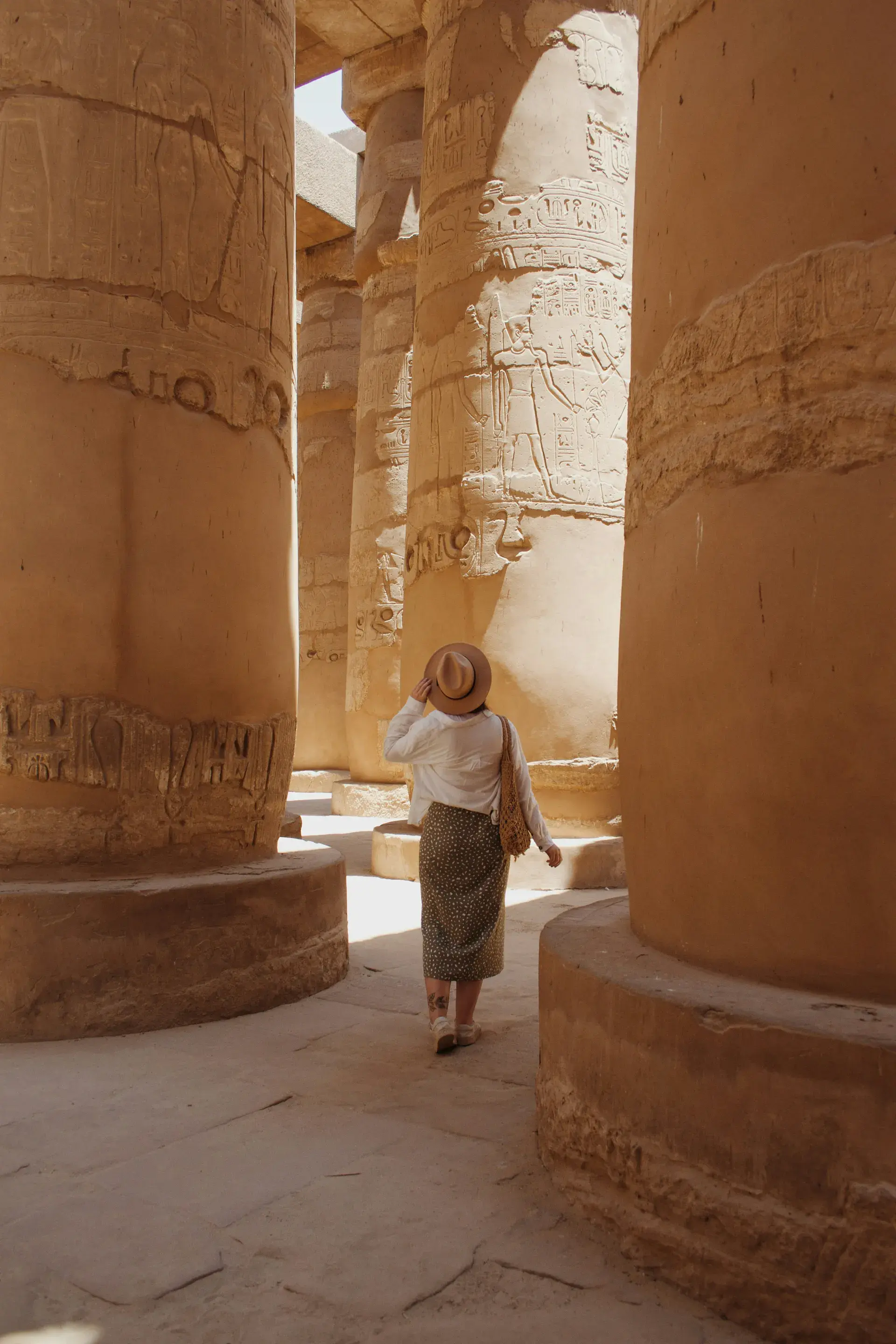
Karnak was built and rebuilt across roughly two thousand years by successive pharaohs, each adding to what came before rather than replacing it. The Hypostyle Hall, complete with 134 sandstone columns set close together with the roof gone, is arguably the single most overwhelming space in Egypt. Luxor Temple sits in the middle of the modern town, best seen after dark when it is lit. The Avenue of Sphinxes connecting the two was excavated and reopened in 2021.
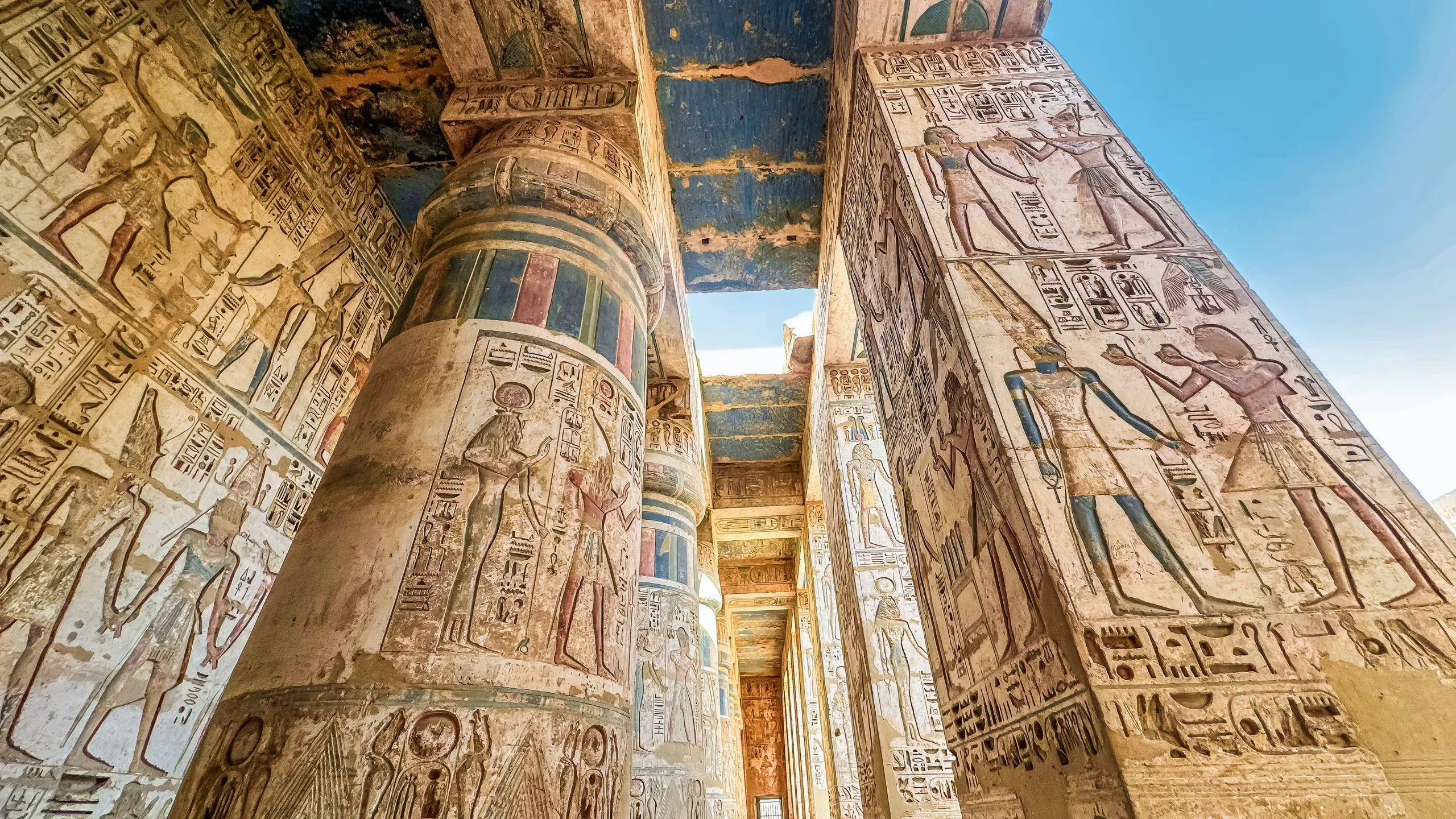
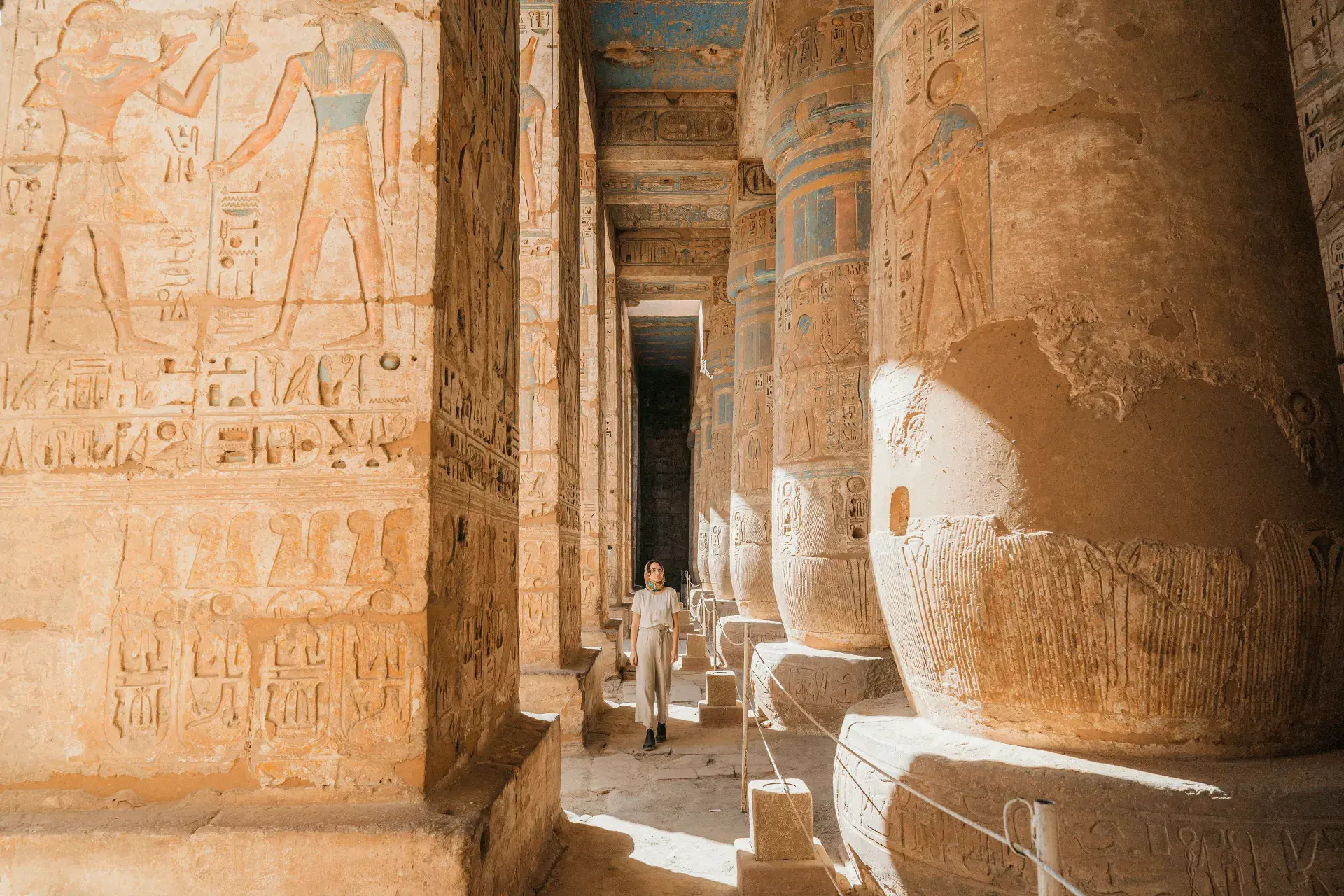
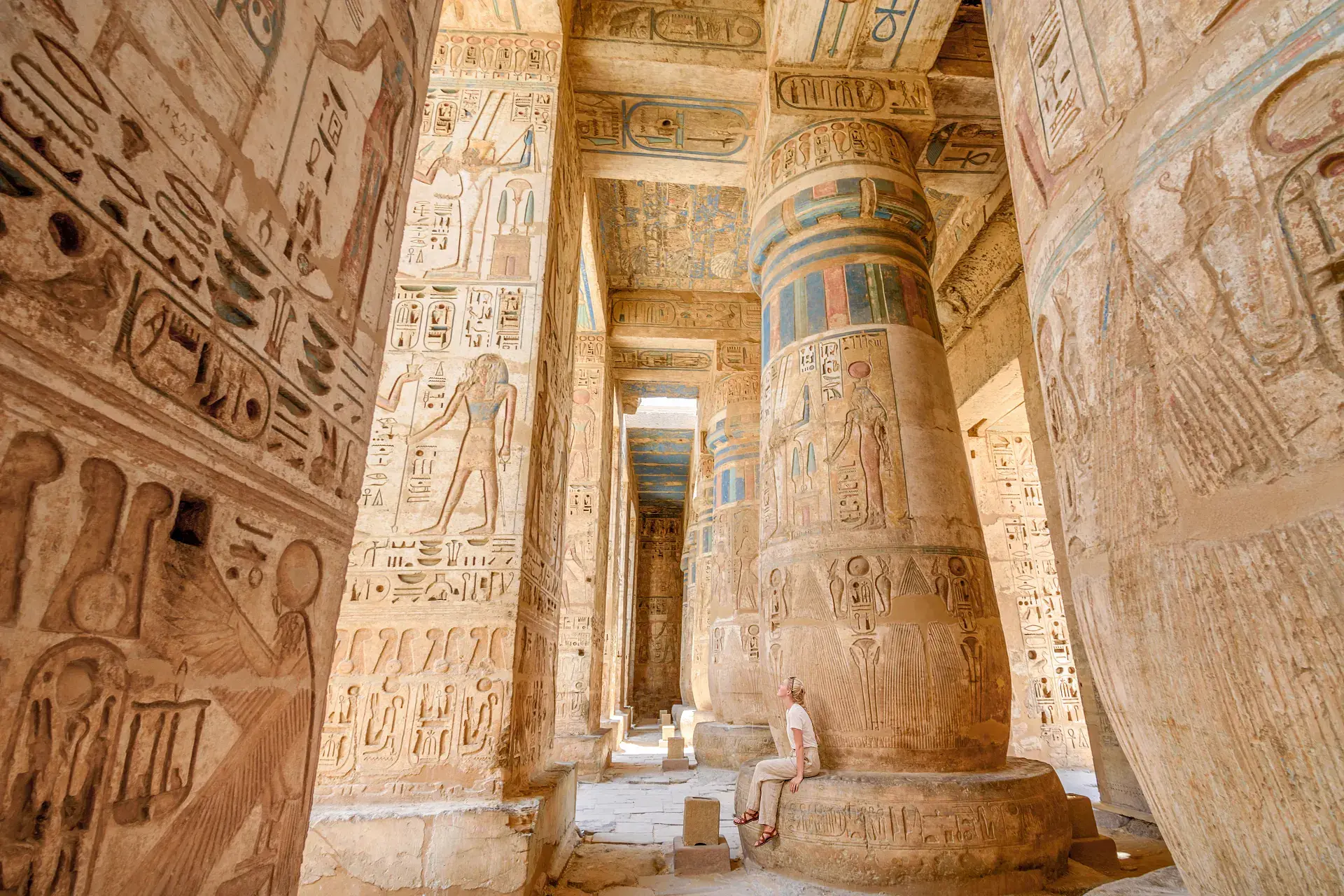
Across the river, the Valley of the Kings holds more than sixty tombs, many with names that will be familiar - Nefertari, Tutankhamun, Seti I and Ramses V and VI. Hatshepsut's terraced temple at Deir el Bahari is the photograph everyone knows, while Medinet Habu, further south and much quieter, has the best surviving colour of any temple in Egypt.
One of the best ways to appreciate this narrow strip of cultivated land is from the sky. Balloons go up before dawn over the west bank, brilliant dots of colour floating in the air as millennia of ancient civilisation unfold below.
Need a helping hand?
Whatever your passion, we make it happen.
Choose your adventure
Speak to one of our team to get started. After all, your travel journal won’t write itself.